How To: Reciprocal Conversation with Kids

Reciprocal conversation is an active exchange of thoughts, ideas, curiosity, and attention.
It’s a valuable skill and we can help kids cultivate it through engaged, thoughtful discourse.
Why are conversation starters helpful?
Conversation starters are a launching point, they solve the problem of “so…what should we talk about?”
With an engaging prompt, kids can exercise the following skills through conversation:
Active Listening: Be intentional about engaging in back-and-forth conversation and attend to the responses of others.
Critical Thinking: Use thought-provoking prompts to encourage the formation of well-reasoned opinions and responses.
Empathy: Exercise empathy by listening to, considering, and appreciating different perspectives.
Social Skills: Navigate conversations and engage with others in a positive and respectful manner.
Self-Expression: Take time to articulate thoughts clearly and effectively.
Language Development: Experiment with new words, scenarios, patterns, and concepts.
Bonding: Encourage open and authentic conversation to better connect with the world around us.
FREE RESOUrCES:
These resources are a great way to get the conversation started, but don’t be afraid to meander between questions and expand on stimulating topics. And whether it’s a conversation between two people or within a group, make sure everyone gets an opportunity for introspective input!

This or that? Use these question prompts to encourage kids to consider their preferences, needs, and personal moral codes.
Find this FREE resource and more in our Conversation Starters tab!

Gathering around the table for a meal creates a dedicated time for family members to come together, share their experiences, and strengthen bonds. Question prompts are a great way to get the conversation started!
Find this FREE resource and more in our Conversation Starters tab!

Feeling and Scenario Cards
Feeling cards provide a visual and interactive way to explore a spectrum of feelings and coping skills. These cards can be used to facilitate open dialogue and help children articulate and navigate their emotions.

Sorting fact from opinion sounds simple, but our self-perception can stubbornly shape the way we internalize passing thoughts.
For this reason, it is important to help kids challenge their thoughts to build a more resilient outlook. In this trio of worksheets, kids are encouraged to consider the statements and decide if they are fact or opinion.
Find this FREE resource and more in our Conversation Starters tab!
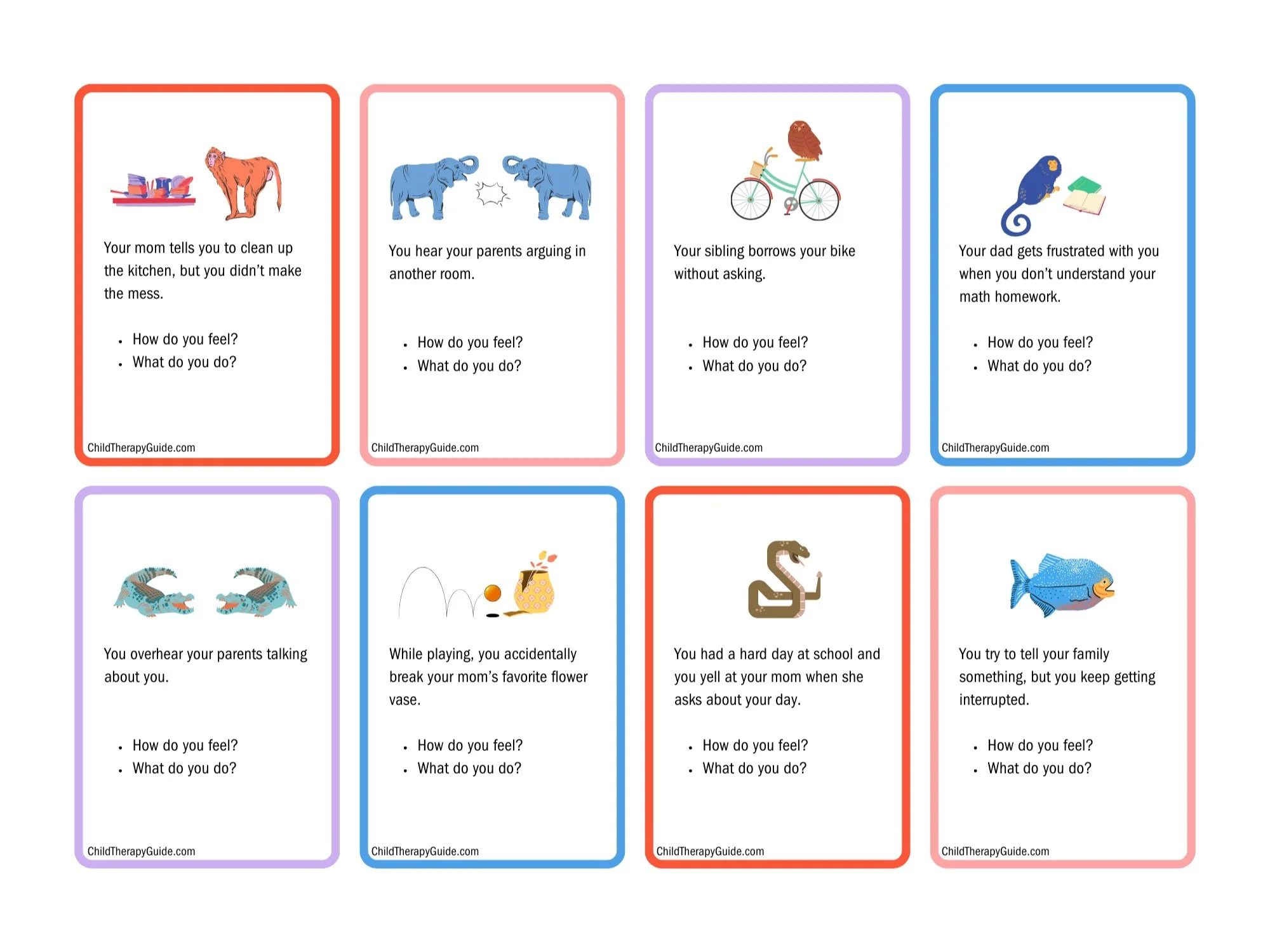
Home-based scenario cards help kids process social, emotional, and moral dilemmas while building empathy and coping skills. These cards present scenarios that often occur in the home, and are a great way to rehearse reactions so that kids have a prosocial roadmap to behave productively and engage with others.
Find this FREE resource and more in our Conversation Starters tab!
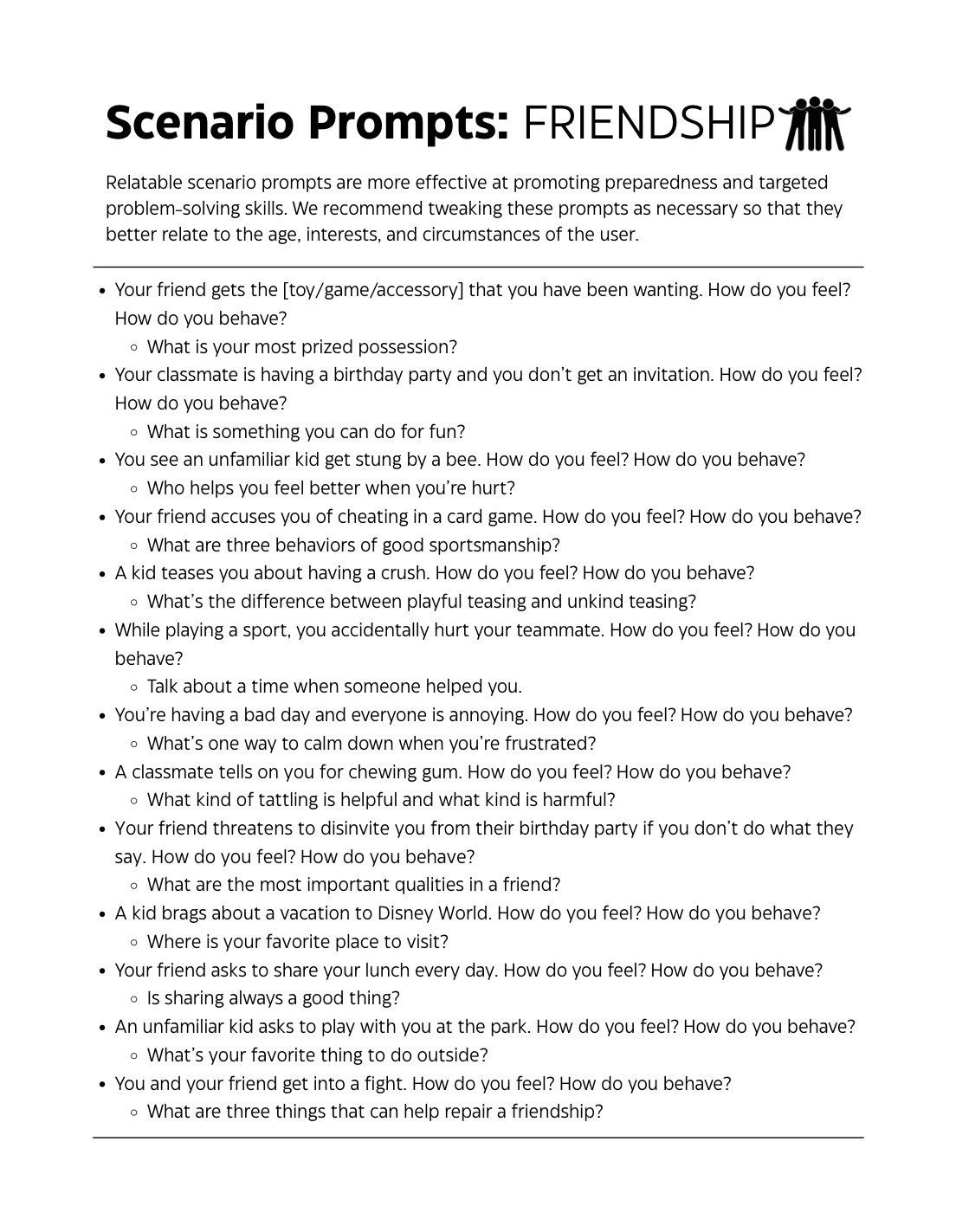
Scenario prompts can help kids feel prepared for and supported through social challenges. By presenting realistic situations for their consideration, these prompts encourage kids to problem-solve, explore emotions, and examine different perspectives.
Find this FREE resource and more in our Conversation Starters tab!

A significant part of anger management is understanding the roots of our anger. The examination of anger contributes to self-empathy and allows for the utilization of targeted coping skills.
Find this FREE resource and more in our Conversation Starters tab!

Parties or social gatherings often alter our daily routines. This can be especially disruptive to young kids. With anticipated disruptions in mind, these conversation starters promote social skills, confidence, problem-solving, and emotional regulation by helping kids feel heard and understood. Preparedness in kids (and adults!) contributes to overall well-being and can significantly reduce dysregulated feelings and behaviors.
Try these talking points on the commute to a birthday party or social gathering and observe the positive effects of collaborative preparedness!
Find this FREE resource and more in our Conversation Starters tab!
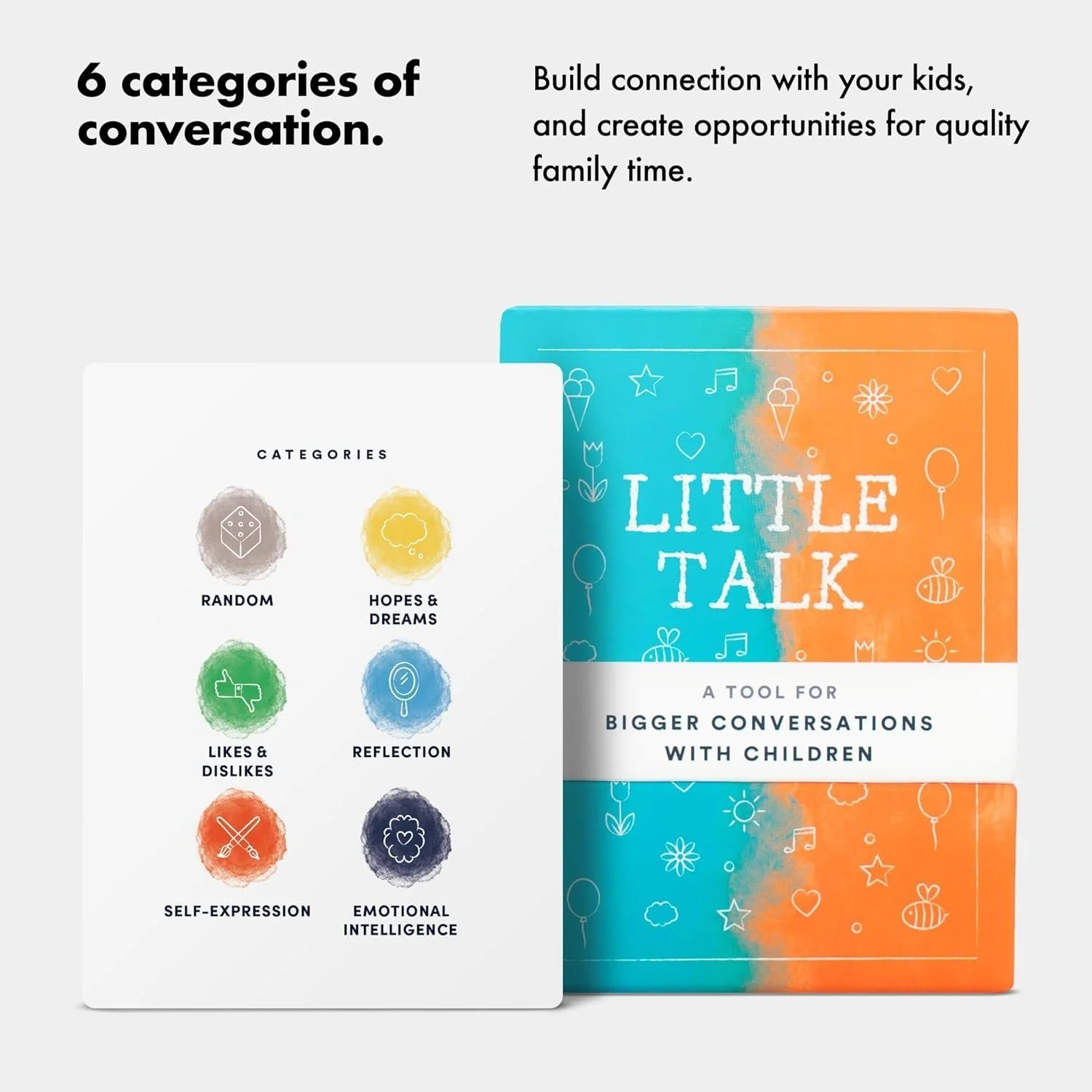
Conversation Cards
Conversation cards provide a framework for children to express thoughts and feelings. Ideal for therapy, the classroom, or family discussions, these cards offer a diverse range of topics and prompts to promote effective communication skills.

This interactive resource is an engaging way to do a daily check-in with kids. We also encourage kids to use it with each other to build meaningful interpersonal bonds!
Tell me something that made you uncomfortable today.
Tell me something that made you laugh today.
Tell me 3 things you are grateful for today.
Take a slow, deep breath, hold it for 3 seconds, and let it out slowly.
Tell me something you are dreading.
Tell me something you are looking forward to.
Tell me something boring that happened today.
Tell me something interesting that happened today.
Find this FREE resource and more in our Conversation Starters tab!

Use conversation prompts to encourage students to share their perspectives through meaningful discussions. Well-crafted conversation starters contribute to a dynamic classroom atmosphere where students feel comfortable expressing their ideas and collaborating with their teachers and peers.
Find this FREE resource and more in our Conversation Starters tab!

School-based scenario cards help kids think and talk about the complex issues that may arise outside of the home.
Find this FREE resource and more in our Conversation Starters tab!
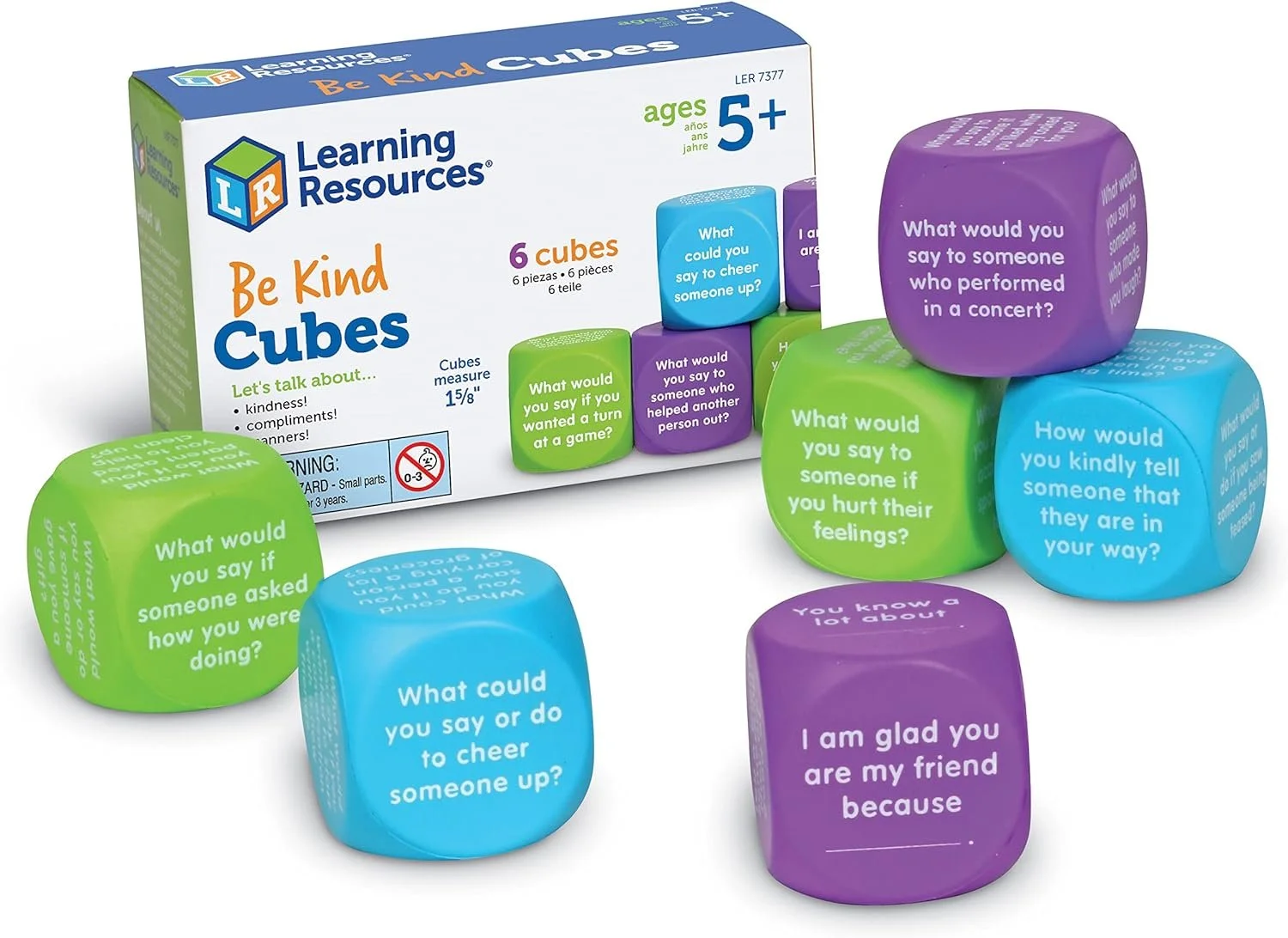
Be Kind Cubes
These cubes inspire conversations about kindness and social interactions to help kids develop emotional intelligence and empathy.

These question tabs could be used for a variety of games to engage kids in conversation. Our favorite variation is to print, trim, and adhere the question tabs onto Jenga blocks—answer questions while you play!
Find this FREE resource and more in our Conversation Starters tab!
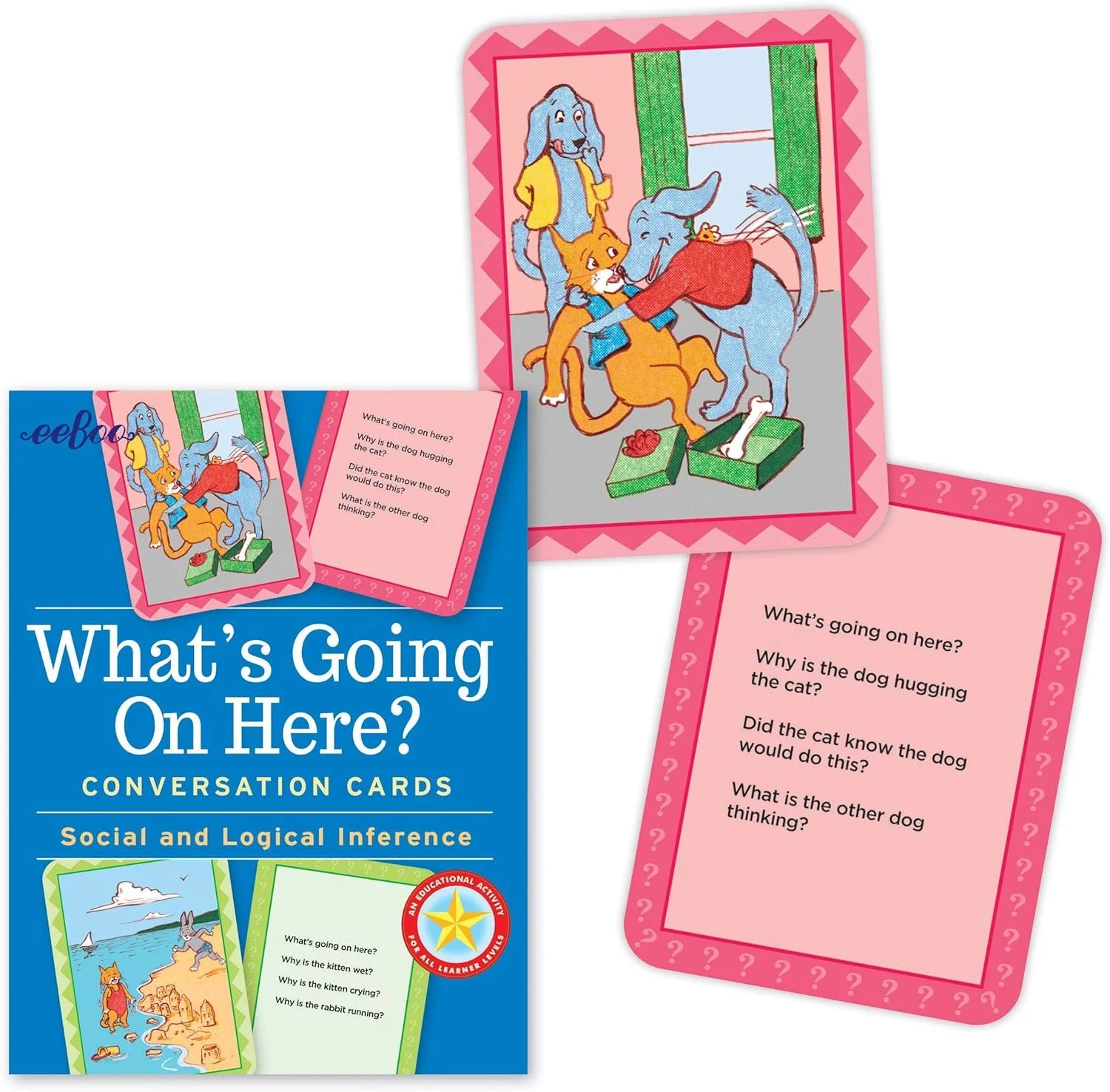
These interpretable cards use emotive illustrations and question prompts to help kids exercise empathy, understand social dynamics, and develop constructive problem solving skills.

There are no wrong answers when using pictures to prompt discussion with kids! These visual scenarios help kids build empathy and healthy communication skills.
Find this FREE resource and more in our Conversation Starters tab!

Books are also a great way to explore and promote prosocial behaviors!
Explore our selection of books about friendship and behavior to continue the conversation!