Self-Perception in Childhood

What is self-perception?
According to Dean et al. (2024), self-perception is “a person's views and beliefs about themselves and their personal characteristics, and the value judgements they place on these traits.”
Positive self-perception “is related to several markers of wellbeing, such as happiness, life satisfaction, self-confidence in social situations, sociability, and optimism” while negative self-perception “is associated with negative thoughts, avoidance of new experiences, difficulty in managing conflicts, poor physical and mental health later in life, depression, loneliness, suicidal thoughts, suicide attempts, eating disorders, anxiety, behavioral problems, drug and alcohol addictions, as well as criminal and anti-social behavior” (Epel et al., 2021).
Kids are often in positions where they can’t change their circumstances and this lack of control can lead to feelings of despair and negative self-perception. So how can we help them find ways to exercise efficacy within the confines of childhood? Connect them with their future selves!
In this way, a future self can become a safe adult that they can talk to and even give advice to. After all, their future selves won’t judge them, because they are them. We have created two free, printable exercises to help kids think about their present situation, how they would like things to be different, and their aspirations for the future.
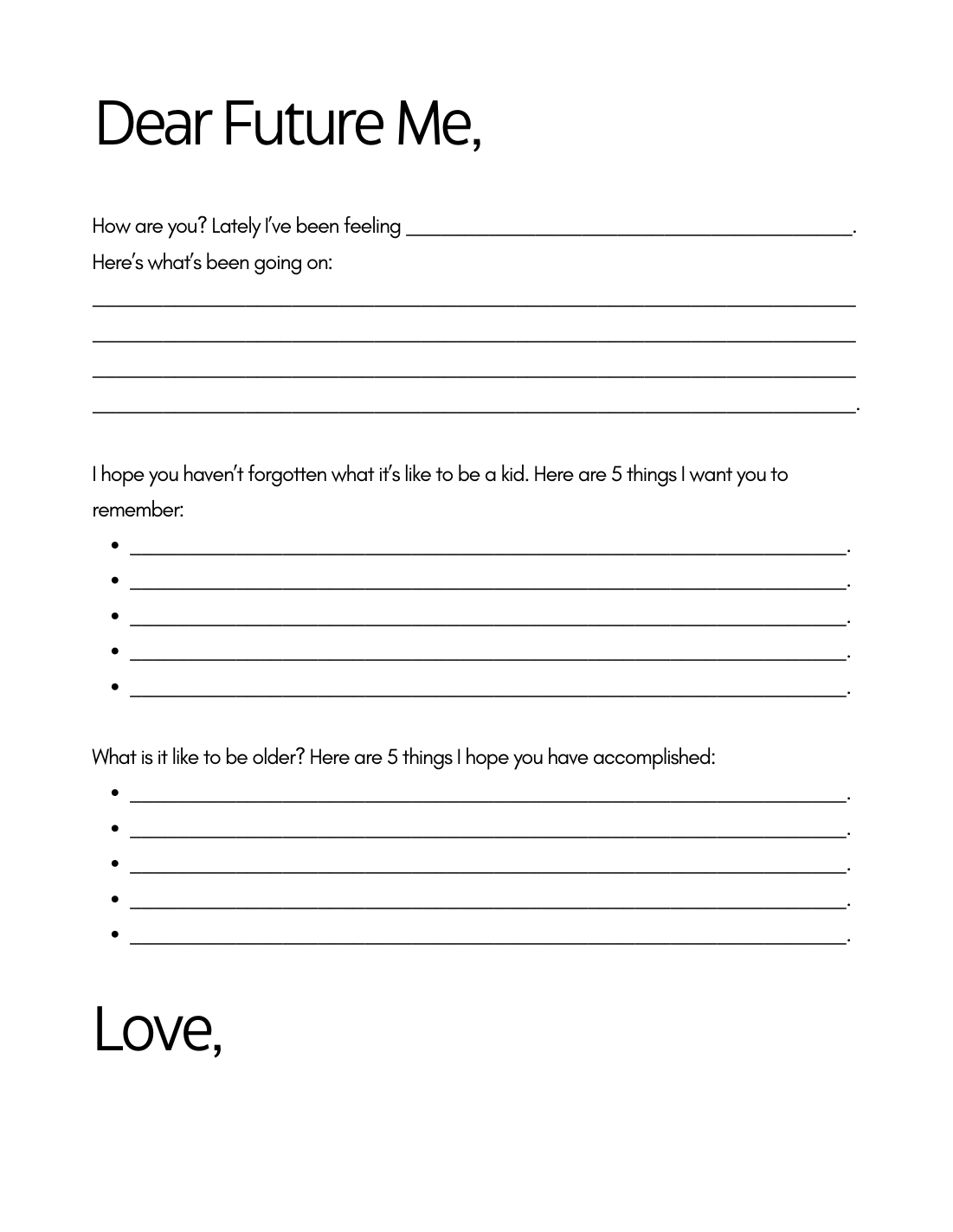
Dear Future Me,
This letter template encourages kids to think about their present through the eyes of their future and vice versa.
Find this resource and more in our WRITING PROMPTS tab.
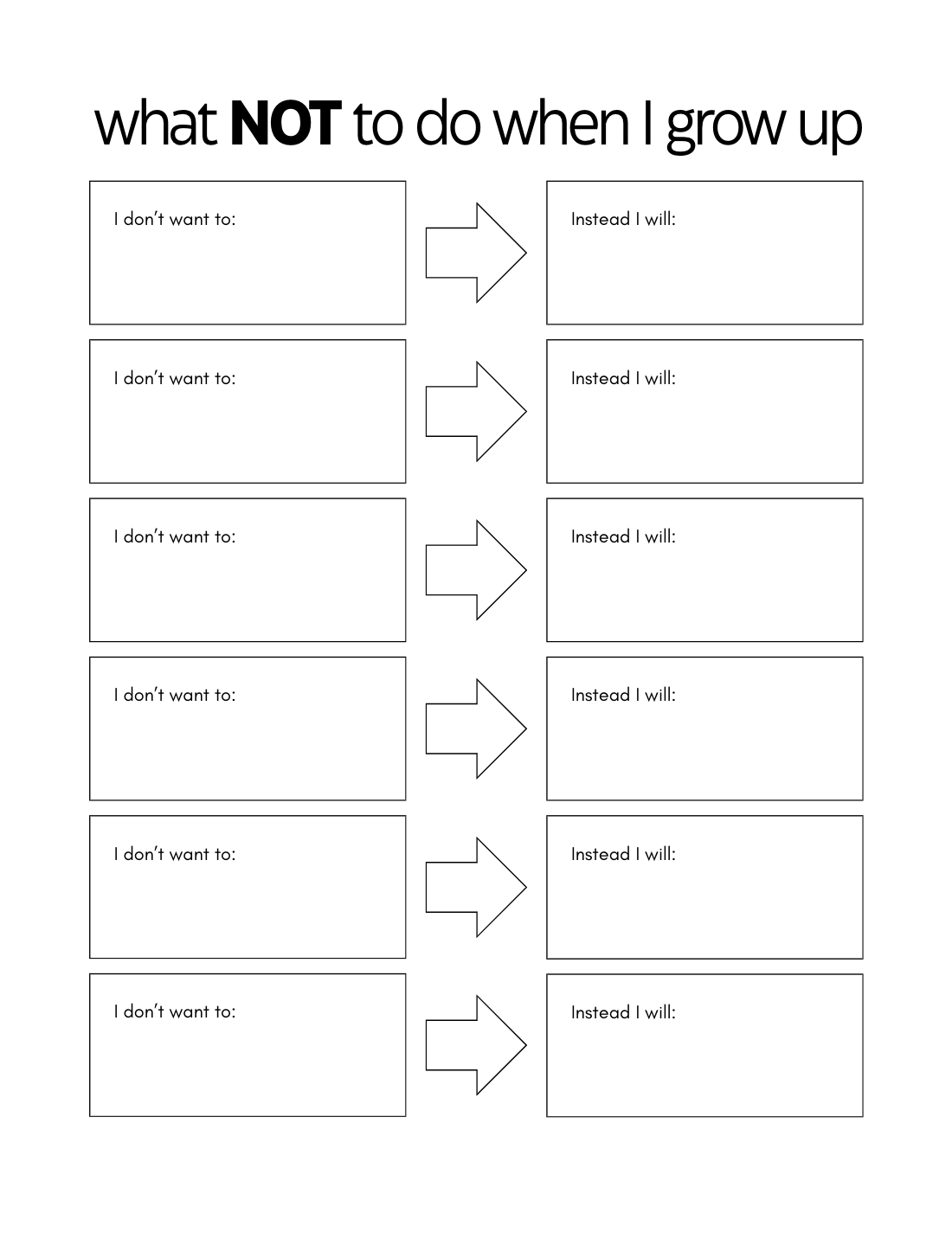
What NOT to do when I grow up
This writing exercise helps kids identify their values and preferences while prompting them to find productive alternatives.
Find this resource and more in our WRITING PROMPTS tab.
REFERENCES
Dean, R. L., Lester, K. J., Grant, E., Field, A. P., Orchard, F., & Pile, V. (2024). The impact of interventions for depression on self-perceptions in young people: A systematic review & meta-analysis. Clinical Psychology Review, 115, 102521. https://doi.org/10.1016/j.cpr.2024.102521
Epel, N., Zohar, A. A., Artom, A., Novak, A. M., & Lev-Ari, S. (2021). The Effect of Cognitive Behavioral Group therapy on Children’s Self-Esteem. Children, 8(11), 958. https://doi.org/10.3390/children8110958