How to [Realistically] Face A Bully

Stand up for yourself. Tell a teacher. Hit them. Don’t back down.
While well-meaning, this kind of retaliatory advice can add to feelings of shame if the victimized kid is unable to wield the advice effectively.
So what to do? Consider the child and the situation and start small.
According to Balluerka et al. (2022) “bullying victimization is a risk factor for developing anxiety and depression in childhood and adolescence, and [the] relationship between bullying victimization and these two emotional problems is mediated by self-esteem.”
By giving kids bold advice that they are unequipped to employ, we may be adding to an already negative self-image. Rather, sometimes the best advice is to do nothing. When being bullied, you don’t have to laugh it off, you don’t have to hold your ground, you don’t have to fight. You’re allowed to do nothing in the moment.
But later, when physical and emotional safety are secure, focus on self-esteem and find your light.
Self-esteem is our opinion of our own worth and allows us to be resilient in the face of adversity (Muris & Otgaar, 2023). We can help kids build self-esteem by encouraging them to consider their values, strengths, natural supports, and coping mechanisms. Self-esteem allows us to appreciate ourselves and can be described as the “light” inside of us.
When working with victimized kids, it can be helpful to talk about preserving their “light” over confronting the bully. Some kids feel empowered to stand up to their bully, but many lack the social supports and/or confidence to successfully navigate a confrontation. In these cases, remind them that they don’t have to do anything except shield their light.
We have collected 10 of our free printable resources to help kids find their light and build self-esteem.
Free Printable Resources:
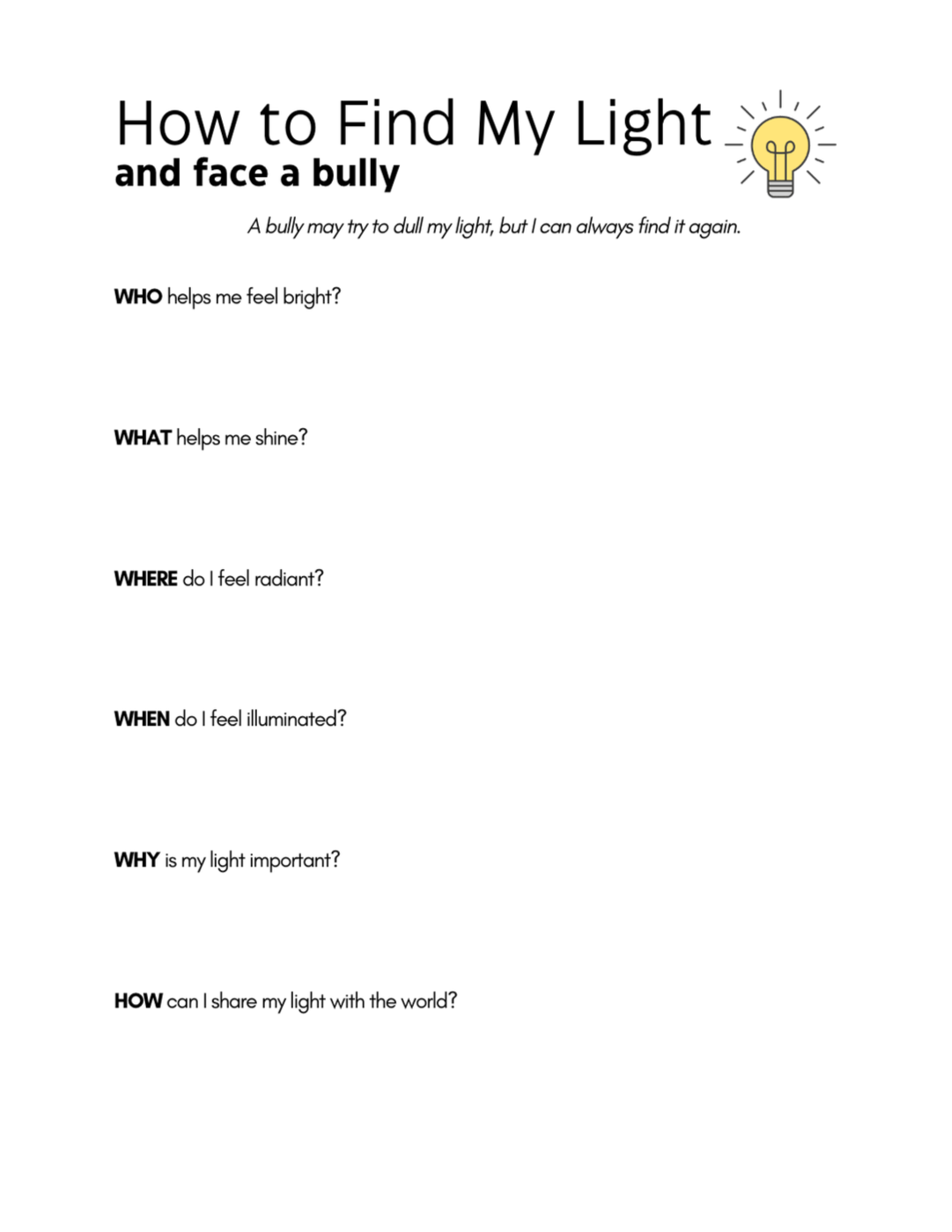
1. How to Find My Light
When working with victimized kids, it can be helpful to talk about preserving their “light” over confronting the bully. Some kids feel empowered to stand up to their bully, but many lack the social supports and/or confidence to successfully navigate a confrontation. In these cases, remind them that they don’t have to do anything except shield their light.
Find this free printable resource and more in our WRITING PROMPTS tab!
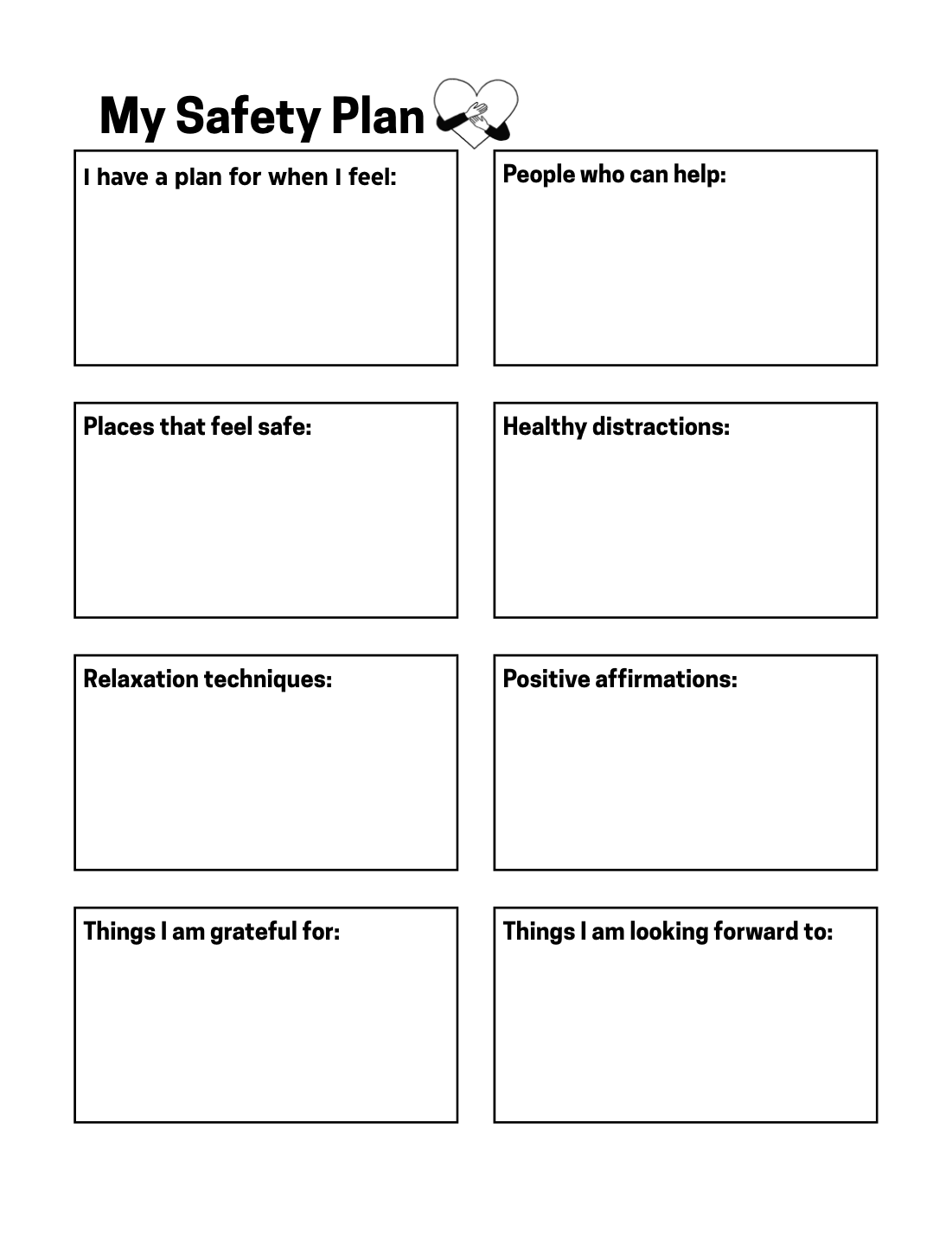
2. My Safety Plan
Early intervention can be life-saving. A safety plan is a personalized roadmap that kids can reference in times of distress. These plans work best when they are workshopped with a trusted adult to help kids identify triggers, pinpoint coping mechanisms, recognize gratitude, and determine safe people and places that can offer support.
When developed collaboratively with a trusted adult, safety planning shows kids that they are valued and that there is hope and help for them.
Find this free printable resource and more in our THERAPEUTIC ACTIVITIES tab!
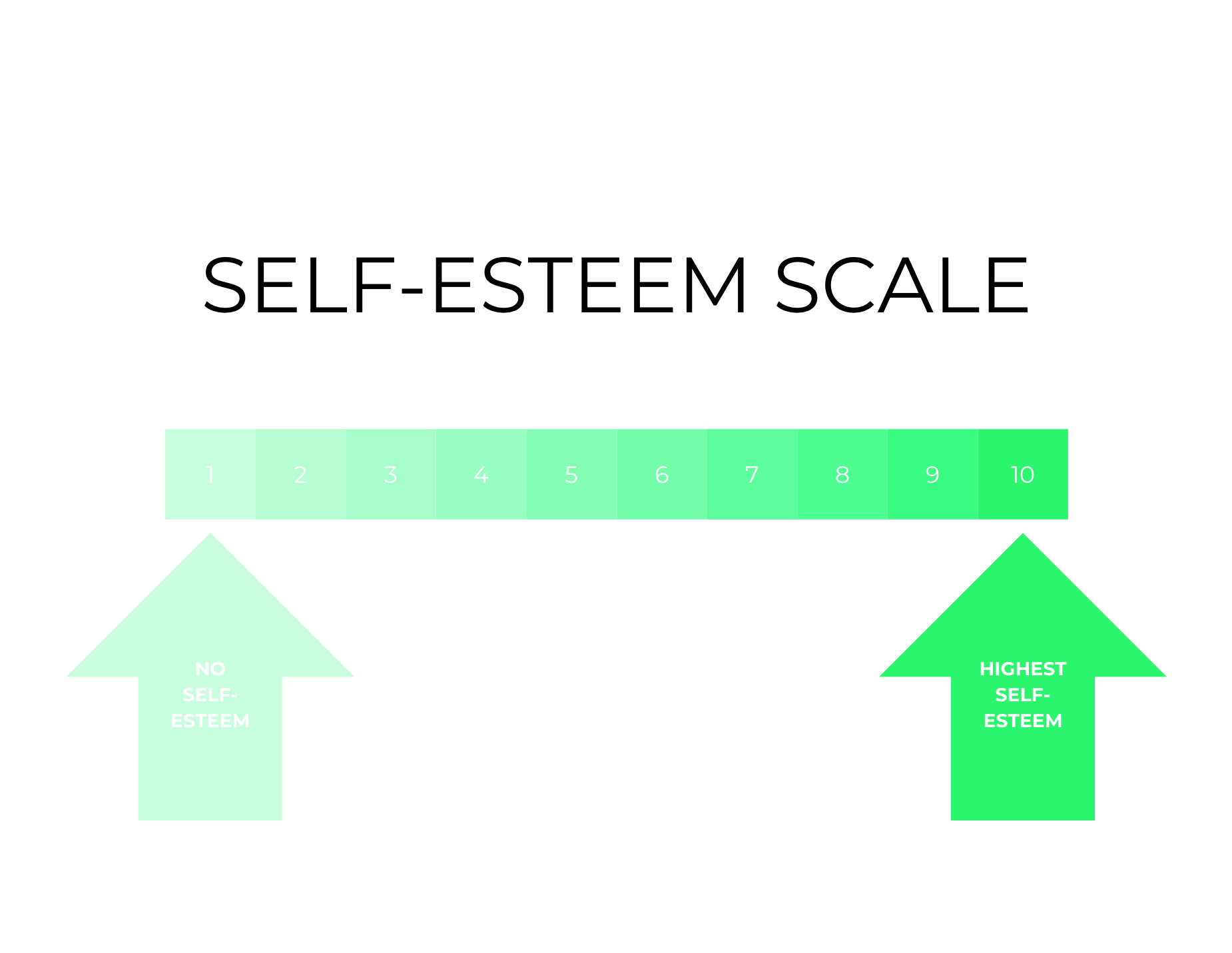
3. Self-Esteem Scale
An emotion scale is a therapeutic tool used to help individuals identify, communicate, and track their emotions.
Explore our scales that measure ANGER, ANXIETY, SUICIDALITY, HYPERACTIVITY, DISTRACTIBILITY, SADNESS, and SELF-ESTEEM.
Find this free printable resource and more in our THERAPEUTIC ACTIVITIES tab!
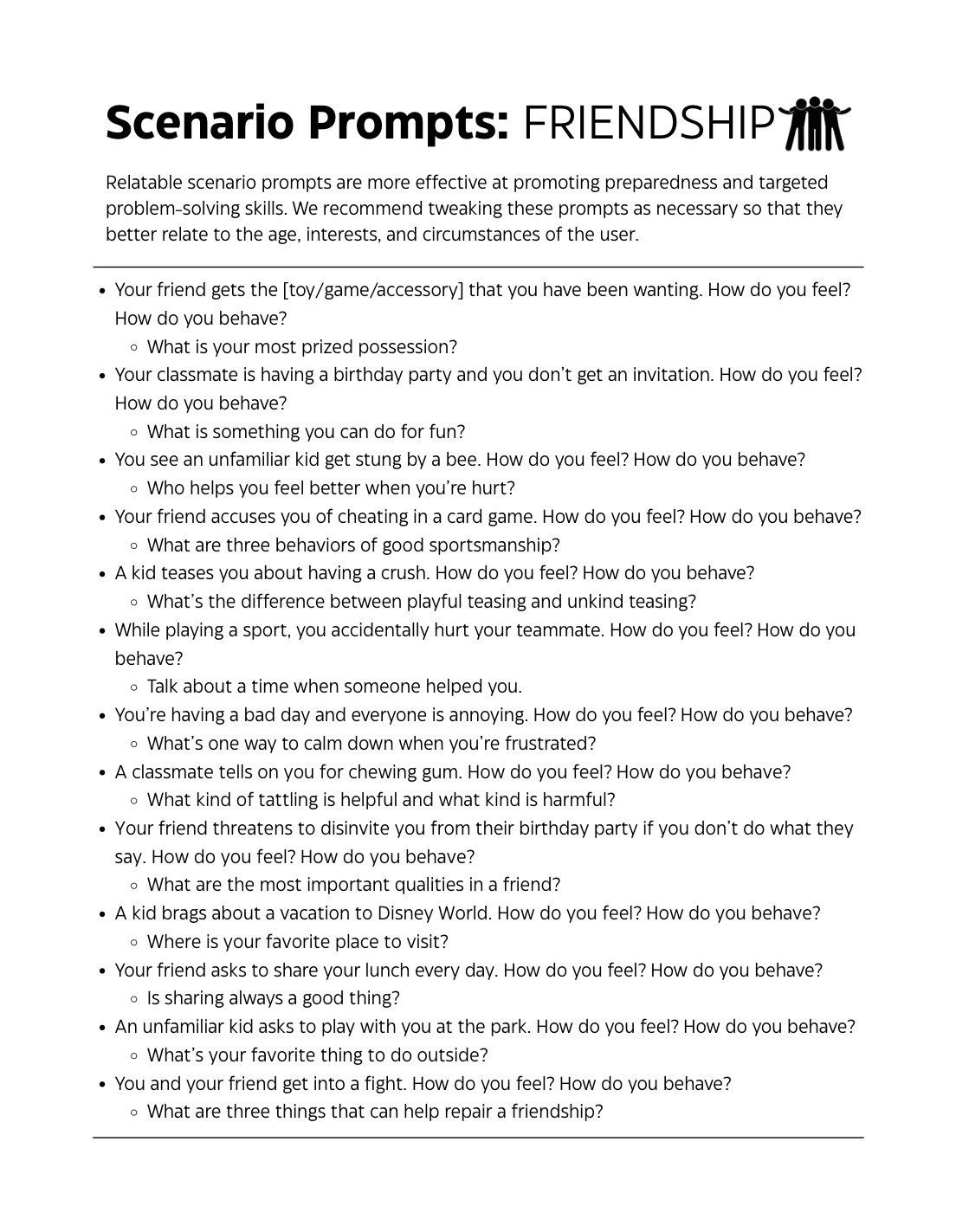
4. Social Skills: Scenario Prompts
Scenario prompts can help kids feel prepared for and supported through social challenges. By presenting realistic situations for their consideration, these prompts encourage kids to problem-solve, explore emotions, and examine different perspectives.
Find this free printable resource and more in our CONVERSATION STARTERS tab!
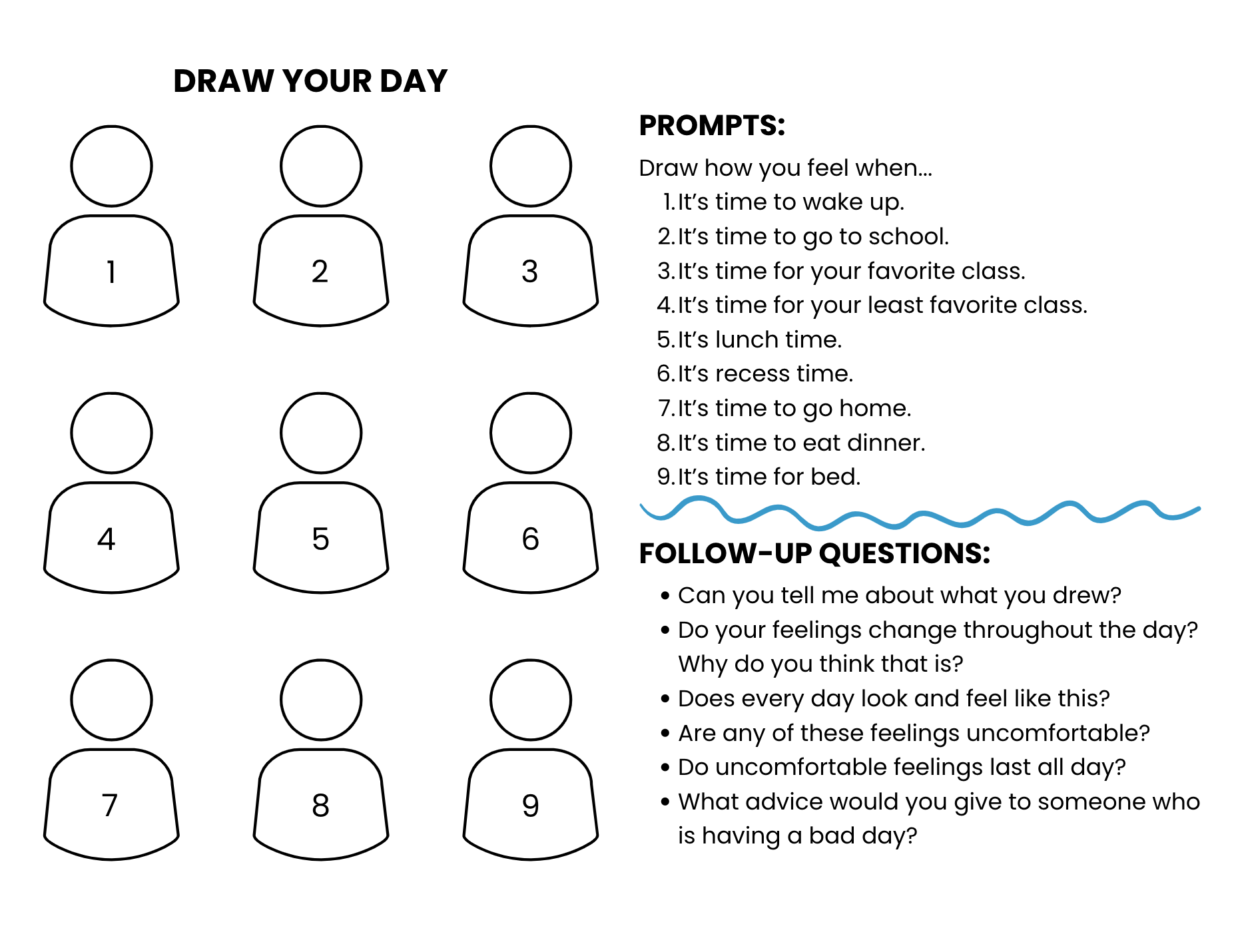
5. Draw Your Day
This worksheet is a great way to help kids conceptualize their days and learn about fluctuating emotions. Use this worksheet to talk about emotions and to gain insights into how a child functions and copes through different parts of their day.
Find this free printable resource and more in our THERAPEUTIC ACTIVITIES tab!
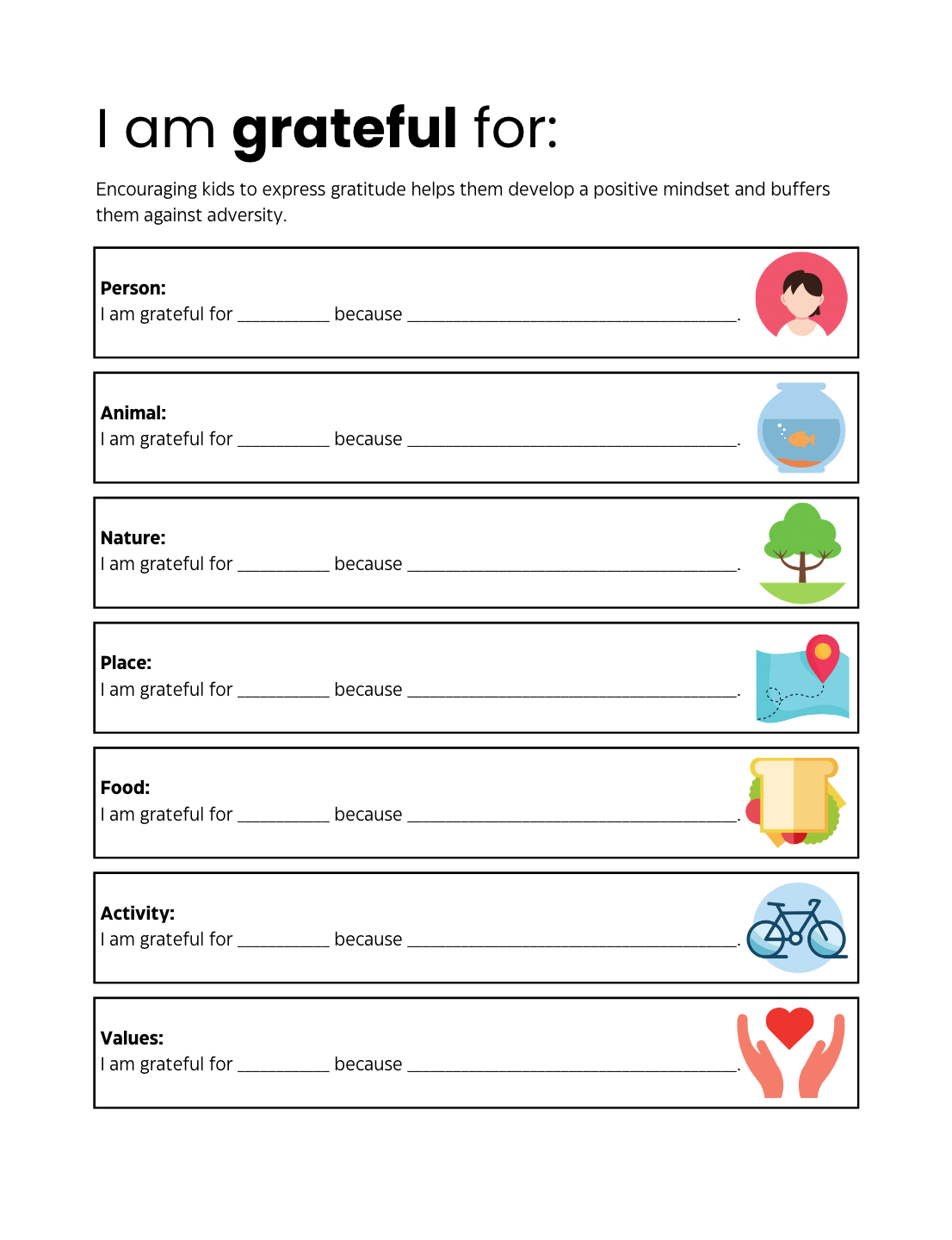
6. Gratitude Exercise
Encouraging kids to express gratitude helps them develop a positive mindset and buffers them against adversity.
Find this free printable resource and more in our MINDFULNESS tab!
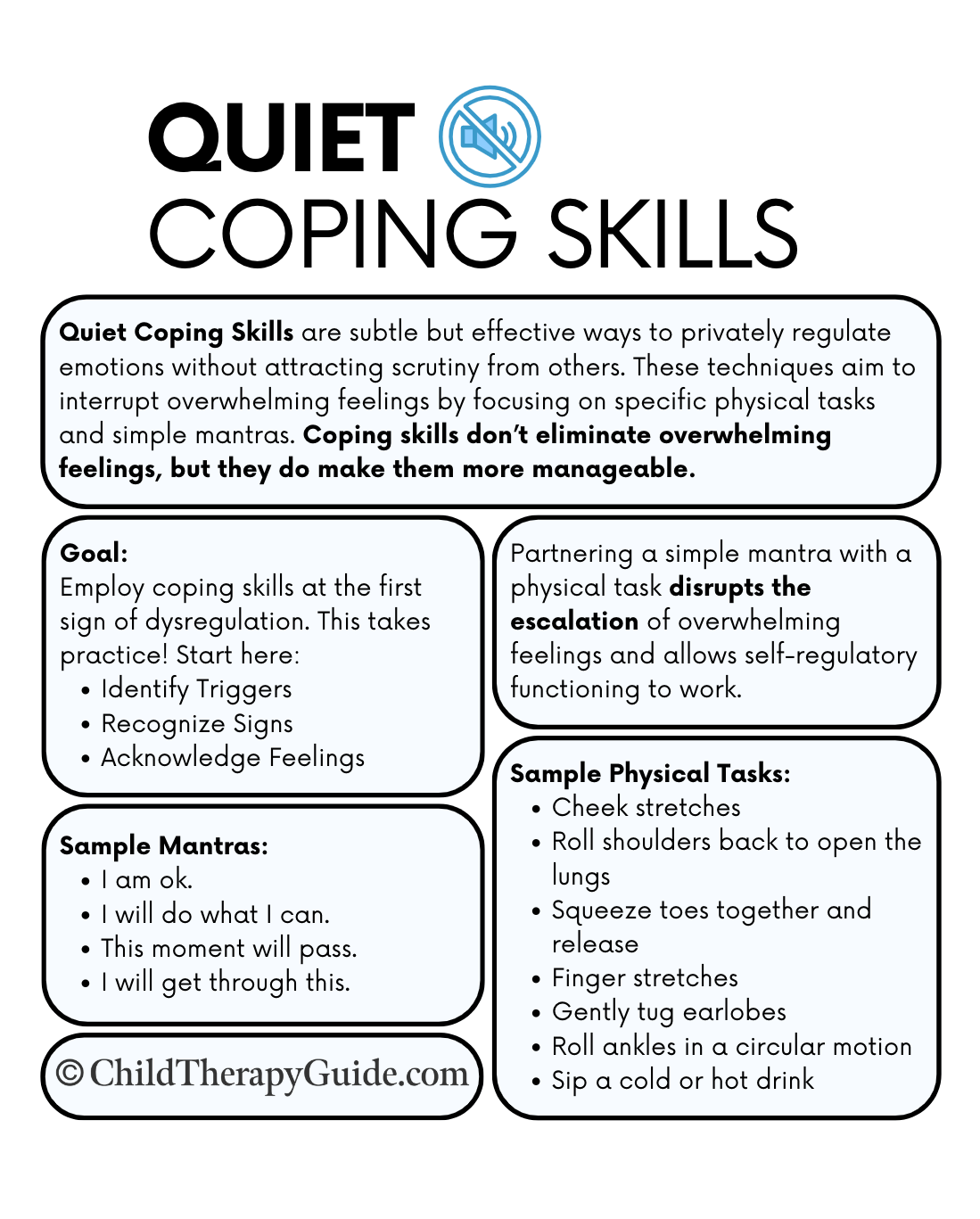
7. Quiet Coping Skills
Quiet Coping Skills are subtle but effective ways to privately regulate emotions without attracting scrutiny from others. These techniques aim to interrupt overwhelming feelings by focusing on specific physical tasks and simple mantras. Coping skills don’t eliminate overwhelming feelings, but they do make them more manageable.
Find this free printable resource and more in our INFOGRAPHICS tab!

8. The Emotional Backpack
This prompt encourages kids to think and write about preoccupying parts of their consciousness. By visualizing “carrying” challenging memories, thoughts, or feelings, they can also begin to “unpack” what is not productive.
Find this free printable resource and more in our WRITING PROMPTS tab!
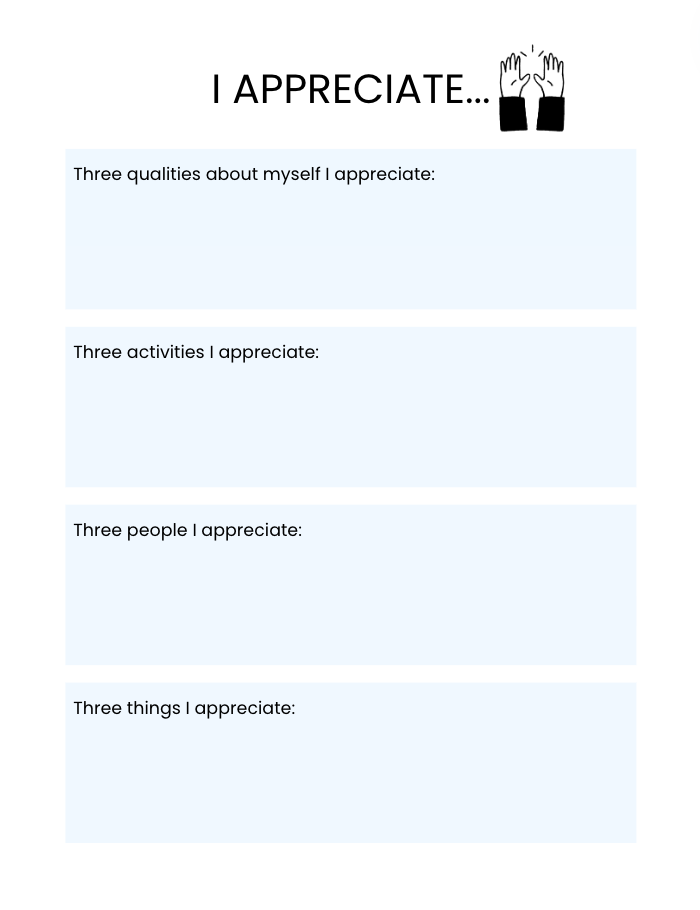
9. Appreciation Exercise
Gratitude is a powerful practice that is linked to resilience, flexibility, and a growth mindset. Identifying what is appreciated and what is not appreciated can help kids understand their own values and priorities.
Find this free printable resource and more in our WRITING PROMPTS tab!

10. Resilience Infographic
Resilience is a dynamic skill set that empowers kids to adapt, learn, and thrive through life’s journey. By nurturing a growth mindset, parents, educators, clinicians, and caregivers can support self-efficacy, problem-solving skills, and optimism in kids so that they can grow and persevere through setbacks.
Find this free printable resource and more in our INFOGRAPHICS tab!
REFERENCES
Balluerka, N., Aliri, J., Goñi-Balentziaga, O., & Gorostiaga, A. (2022). Association between bullying victimization, anxiety and depression in childhood and adolescence: The mediating effect of self-esteem. Revista De Psicodidáctica (English Ed ), 28(1), 26–34. https://doi.org/10.1016/j.psicoe.2022.11.001
Muris, P., & Otgaar, H. (2023). Self-Esteem and Self-Compassion: A Narrative review and Meta-Analysis on their links to Psychological Problems and Well-Being. Psychology Research and Behavior Management, Volume 16, 2961–2975. https://doi.org/10.2147/prbm.s402455