Navigating Emotional Dysregulation in Kids
Escape routes from Meltdowns

What is emotional regulation?
“Emotion regulation is the ability to recognize, evaluate, modify, and manage emotions in a personal and socially acceptable way, in order to maintain mental control over strong feelings, and arrive at adaptive functioning (Paulus et al., 2021).”
Emotional regulation is often equated with calmness, but that’s not the whole picture. Rather, emotional regulation is effective management of all emotions. Anger, sadness, frustration, jealousy, grief, excitement, shock, elation, fear are not generally “calm” emotions, but a person can experience them from a place of governance.
Just because a feeling isn’t comfortable doesn’t mean it is dysregulated.
Don’t fall into the trap of emotional perfectionism.
According to Kelly (2015), “Perfectionists fear imperfection, and equate any error with personal defectiveness. They lead their lives convinced that perfection is the only means to self-acceptance.” Emotional perfectionism is the idea that a person must always have complete control over their emotions and only experience "acceptable" or "positive" feelings.
Emotional regulation is NOT emotional perfectionism.
People with emotional perfectionism often view uncomfortable emotions like sadness, anger, or anxiety as signs of weakness or failure. This mindset can lead to emotional suppression, shame, low self-esteem, and depression. Learning to accept and process emotions in a healthy way is the key to emotional regulation and well-being.
How can we help kids learn to regulate their emotions?
Remember 2 Main Things:
Deescalation must occur before rational thinking can be employed. This means that you cannot reason with a kid while they are upset. Read on to learn about our suggested deescalation techniques for kids (and teens…and adults!).
Reflective activities build empathy, coping skills, and resilience. When a kid is regulated, explore past behaviors and plan for how to handle future upsets. Read on to learn about our suggested reflective activities for kids.
1. Deescalation Techniques:
Calm-Down Cues
Some kids respond well to a distinctive cue that serves to interrupt emotional spirals. It can be a word, sound, or hand motion that is given when a kid is experiencing dysregulation.
In moments of calm, pick a cue and explain that the cue signals that help is needed and the kid’s job is to “let the help in.”
Example: In a calm moment, a child and a parent agree on a cue word. When the kid experiences dysregulation, they can use the cue word to signal to the parent that they need help, OR the parent can use the cue word to signal to the kid that they need to accept help.
The cue word serves as an exit route from unmanageable emotions. When the cue word is spoken, pause and let the help in*.
*“Help” will look different for different people and different scenarios. Try to approach these situations with an adaptive mindset. Read on for more suggestions.

Don’t Talk About It (right now)
Studies show that when a kid is dysregulated, they are unable to effectively use rational thinking or problem solving skills. According to Paulus et al. (2021), emotional upset “[interferes] with cognitive processes that interact with reactive processes.”
This means that we must allow kids to deescalate before we engage them in reflective exercises. Keep in mind that there is a difference between a kid who is experiencing uncomfortable emotions (anger, annoyance, hurt feelings) and a kid who is truly dysregulated. The truly dysregulated child cannot engage in rational thinking, but the uncomfortable but regulated child can.

Take Space
Allow a child to take space and/or identify a calming activity that does not involve a screen. Screen time can lead to mismanaged and/or further dysregulated emotions. According to a study by Oflu et al. (2021), “investigating the relationship between the emotion regulation skill and screen time revealed that excessive screen time is associated with emotional lability in this early childhood period.”
So what can we do? “We can reduce the possible negative impacts of excessive screen time and promote children's healthy development and well-being by increasing knowledge and encouraging alternative activities that stimulate development” (Muppalla et al., 2023).
Open-ended toys, enriching books, a warm bath, and screen-free audio are all great alternative activities!
Emphasize a respect for “taking space” in your family by having open conversations with all family members. When we notice someone getting upset, let’s give space. Taking space is a reset, not a punishment.

Coping Skills
Coping skills don’t eliminate overwhelming feelings, but they do make them more manageable. Fresh air, mindfulness, exercise, art, deep breaths, acupressure tapping, friends—these are all ways to cope with difficult emotions. Identify and practice successful coping skills so that they come naturally in times of upset.
Quiet Coping Skills are subtle but effective ways to privately regulate emotions without attracting scrutiny from others. These techniques aim to interrupt overwhelming feelings by focusing on specific physical tasks and simple mantras.
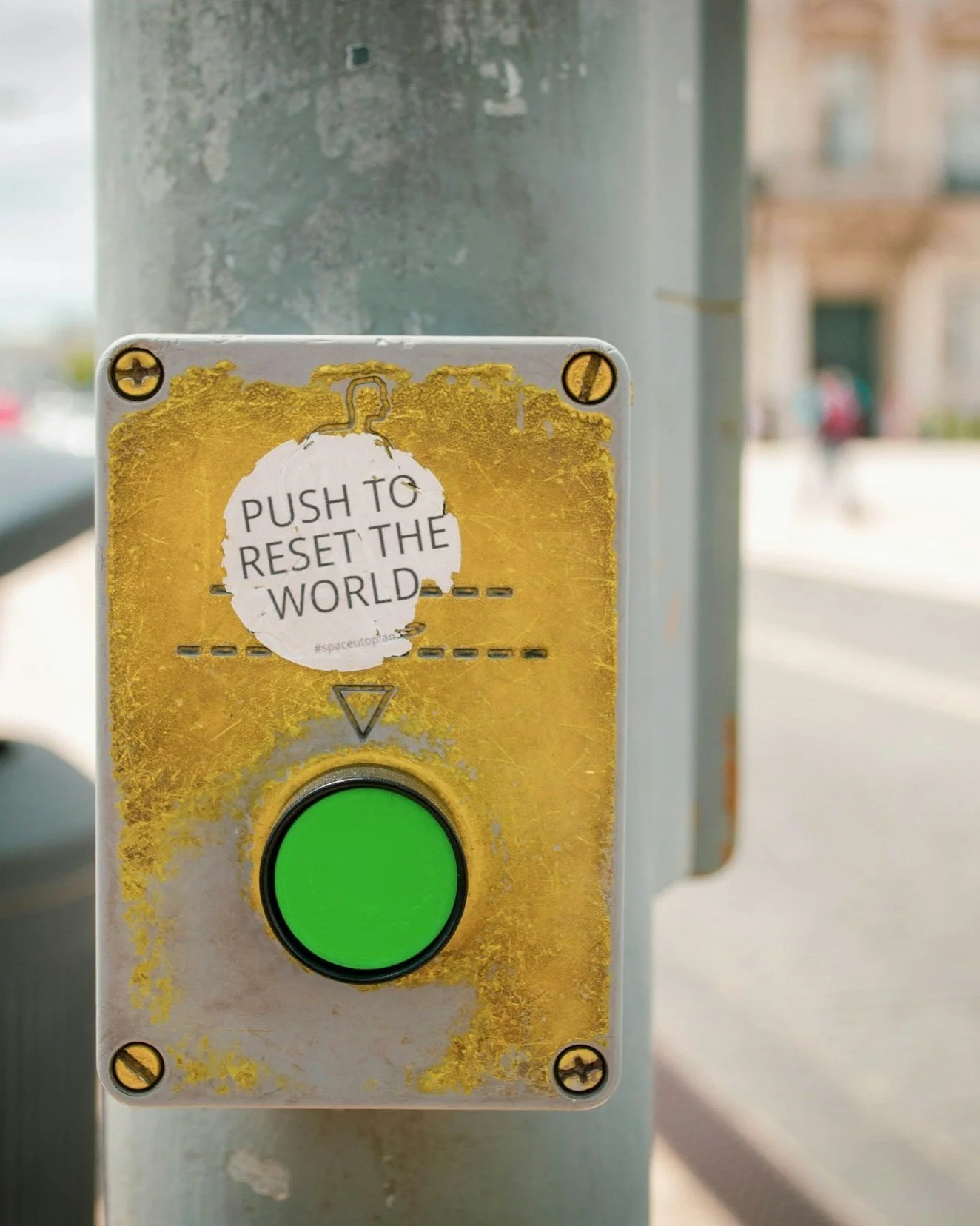
Family Reset Button
A family reset button is an agreement that, when the button is “pushed” (or the plan is employed), all members move on from whatever maladaptive mood, behavior pattern, or tone that they may be caught in.
Here’s how to works: In times of calm, everyone collaborates and agrees on what the Family Reset Button is and when it should be used. For example: when we are all upset, we take 15 minutes to ourselves, then come together to eat popsicles.
Talk about how it might feel in the moment and how to approach feelings of resistance. Get mutual agreement that everyone will let the button do its job, even if they don’t feel like it in the moment.
Suggestions: Popsicles, Guided Meditation, Walk Outside, 5 Senses, Gratitude Sharing
2. REFLECTIVE ACTIVITIES:
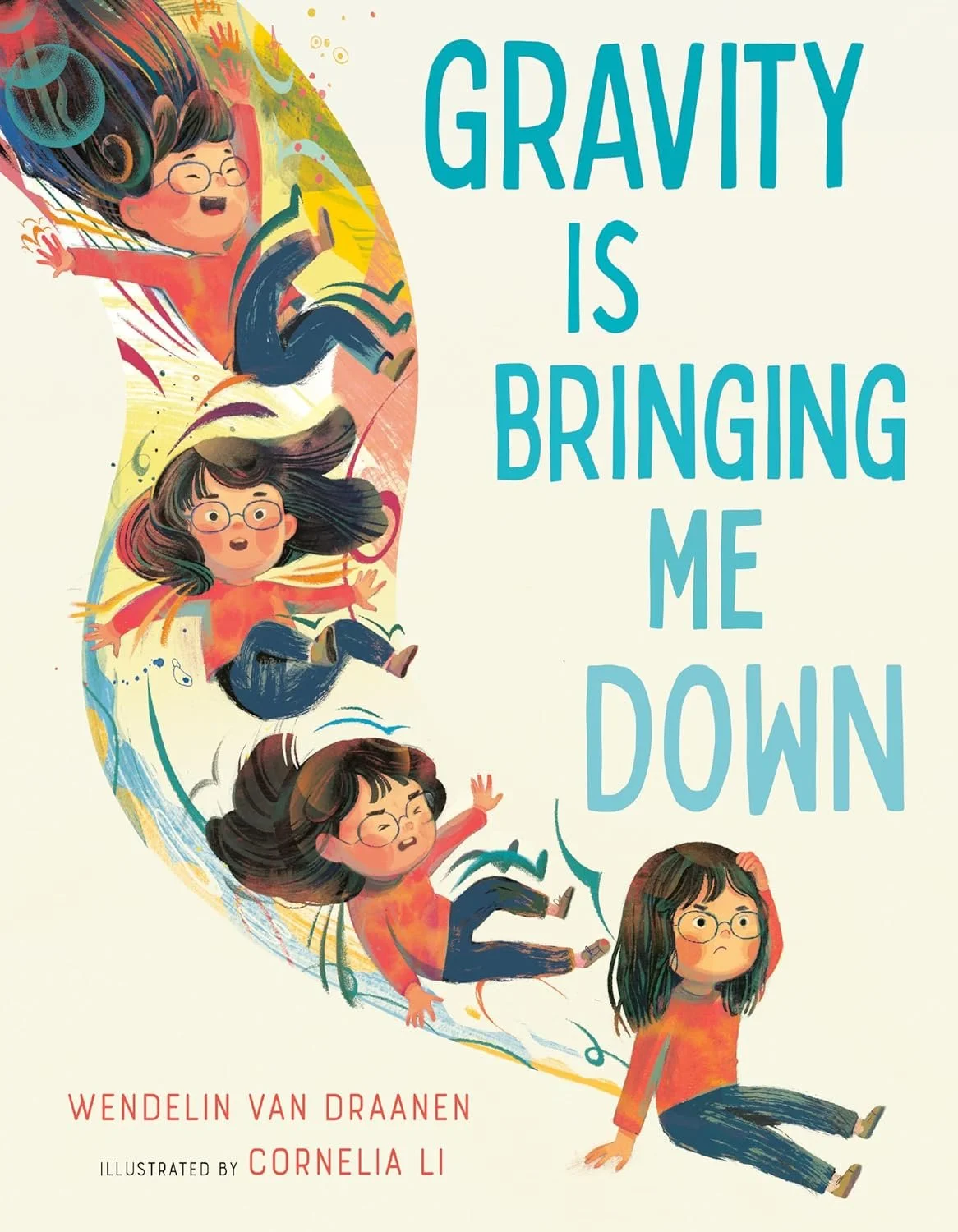
Books About Behavior
Books are a great way to analyze behavior from a bird’s eye view! They allow kids to see situations from different perspectives and build empathy for themselves and others.
Explore our recommended BOOKS ABOUT BEHAVIOR.
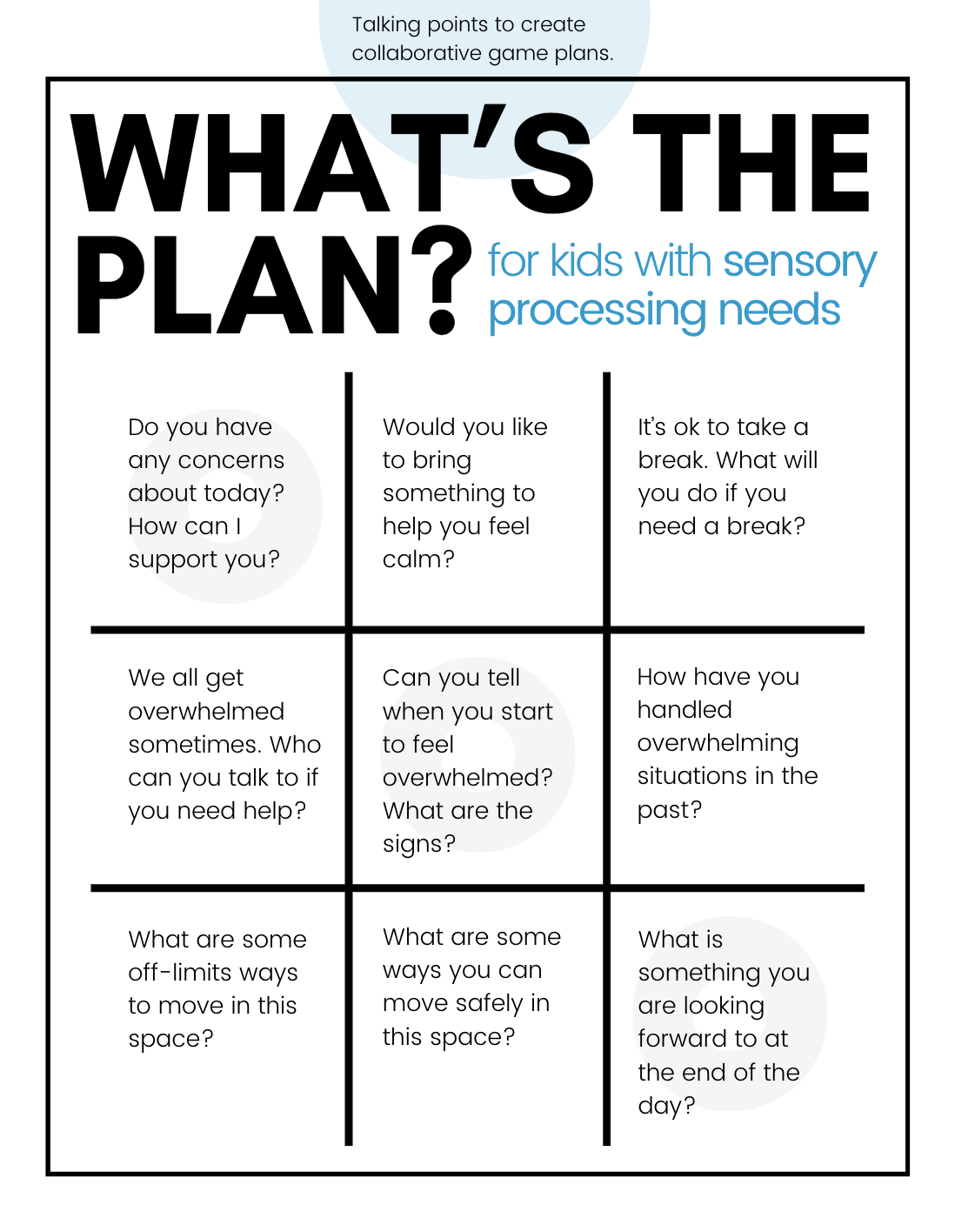
Kids with sensory processing disorders often benefit from feeling prepared and supported. When possible, ask kids how they would like to handle difficult situations and how they would like to be supported. This worksheet offers a framework to talk to kids before entering potentially overwhelming situations.
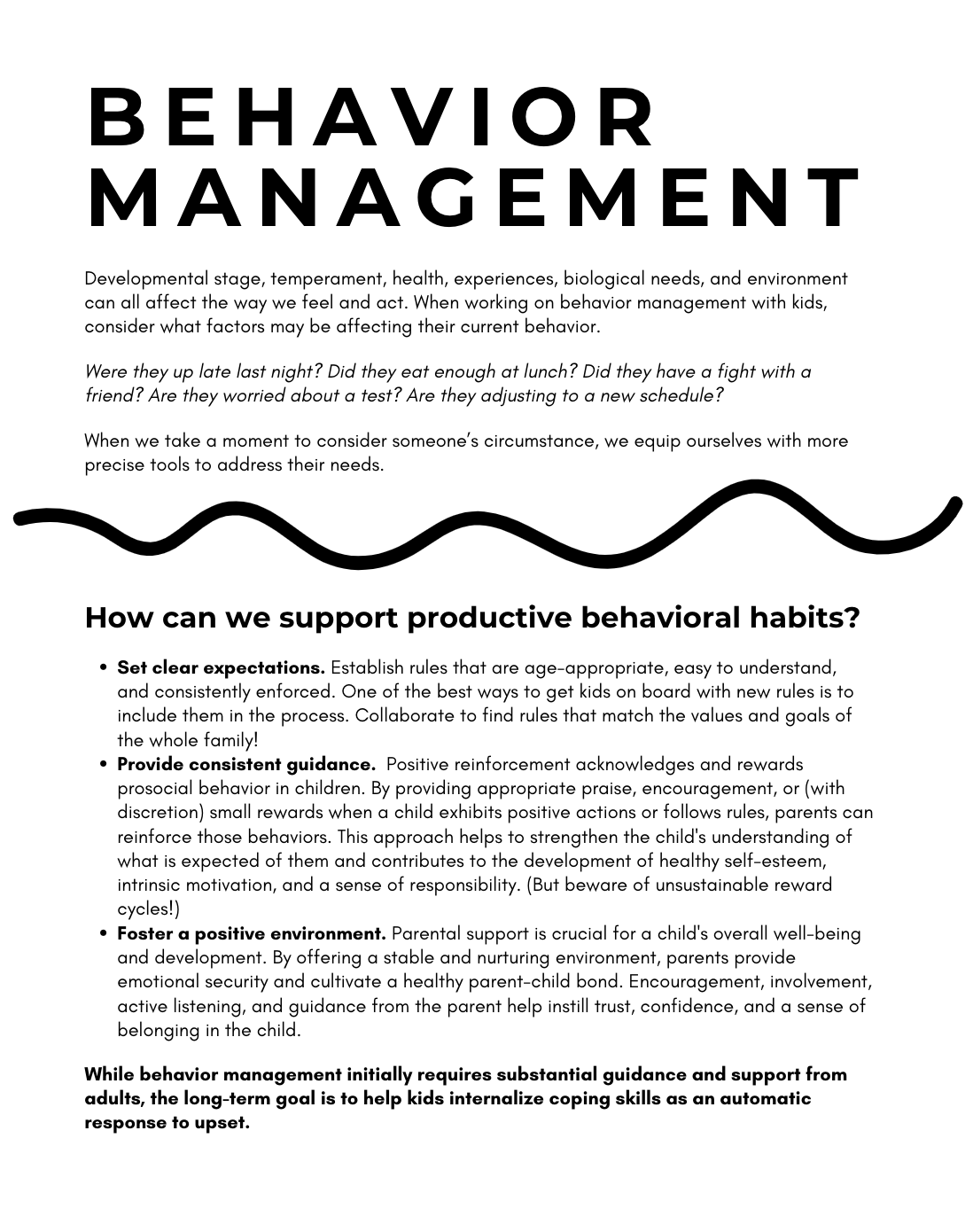
Behavior Management Guide
Every kid is different and we have to tailor behavior management plans to their individual needs and abilities. Check out this blog post for practical guidelines for a balanced approach to behavior management.
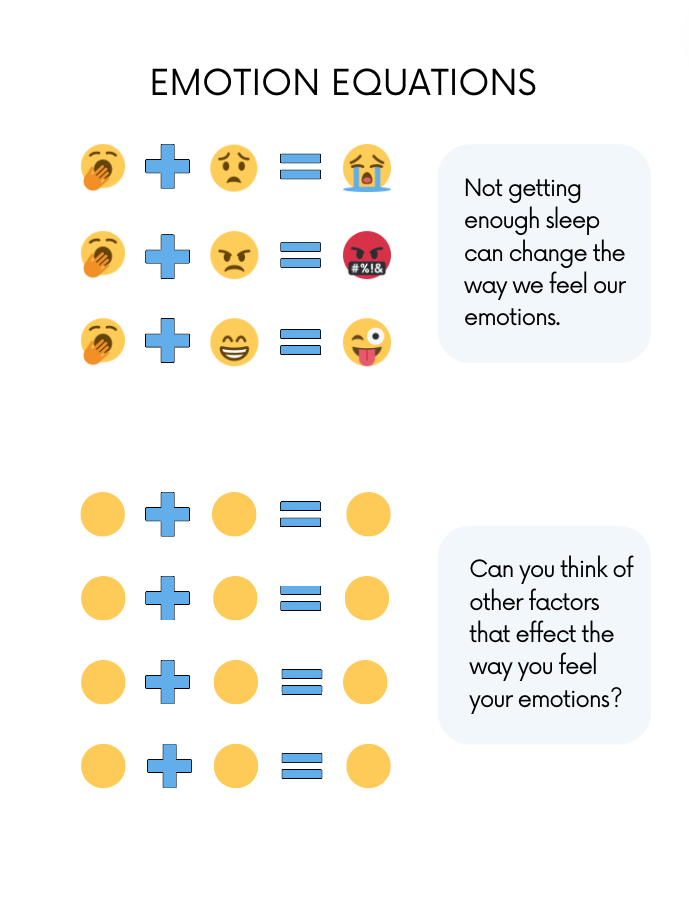
Not getting enough sleep can change the way we feel our emotions. What other factors effect the way we feel and behave?
This worksheet helps kids understand how different environmental, physiological, social, emotional, or physical factors may effect their emotional expression. When kids understand their feelings, they are better able to self-regulate and have empathy for themselves and others.

This worksheet helps kids identify, relate to, and troubleshoot emotional and behavioral patterns. The visual worksheet is accompanied by talking points to help kids take new perspectives and build empathy and resilience.

A significant part of anger management is understanding the roots of our anger. The examination of anger contributes to self-empathy and allows for the utilization of targeted coping skills.
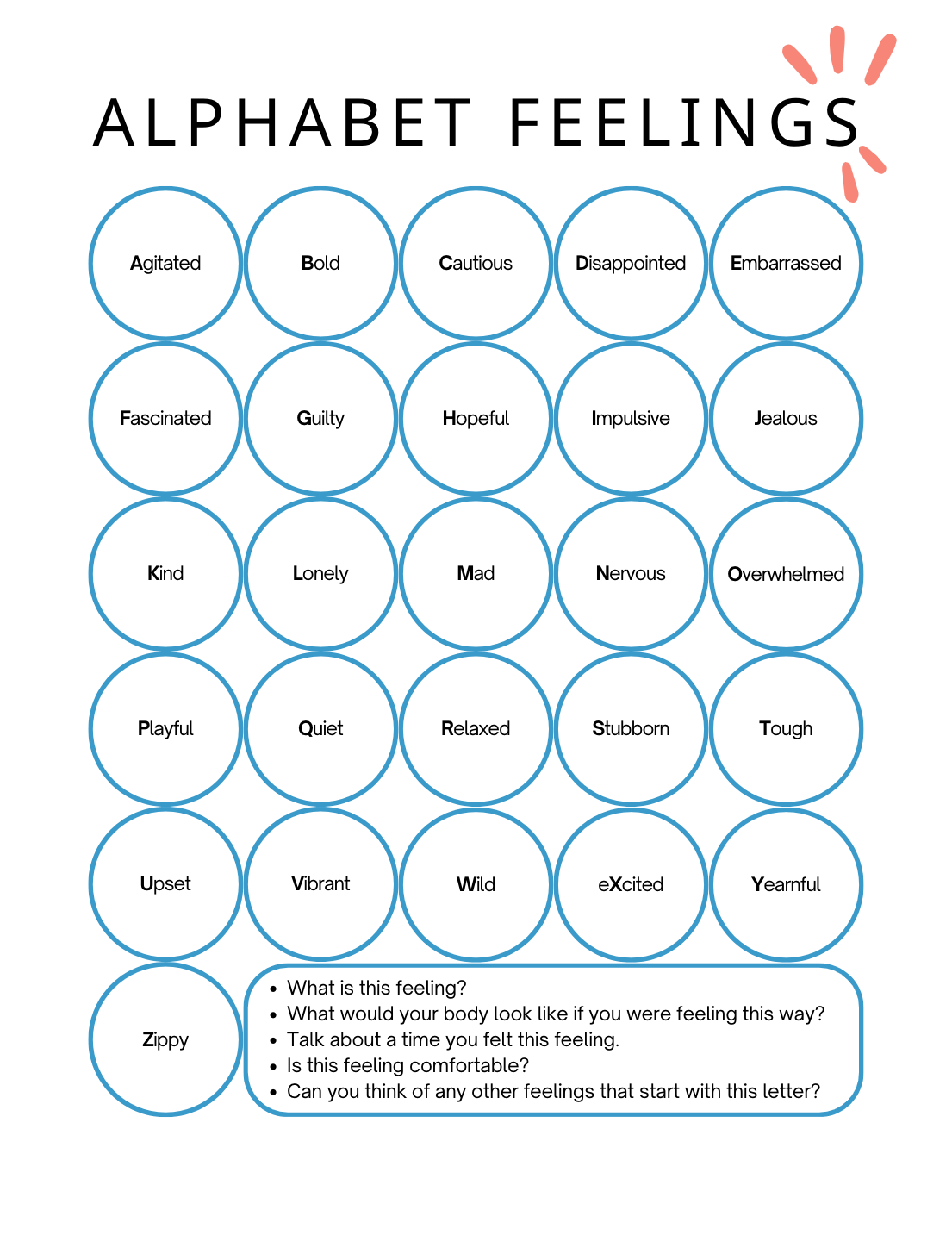
Emotional intelligence is the ability to understand, name, and recognize feelings in ourselves and others. It is an essential skill for children (and adults!) to cultivate because it forms the foundation for social and emotional development. Alphabet Feelings help kids practice and maintain social and emotional (SEL) growth.
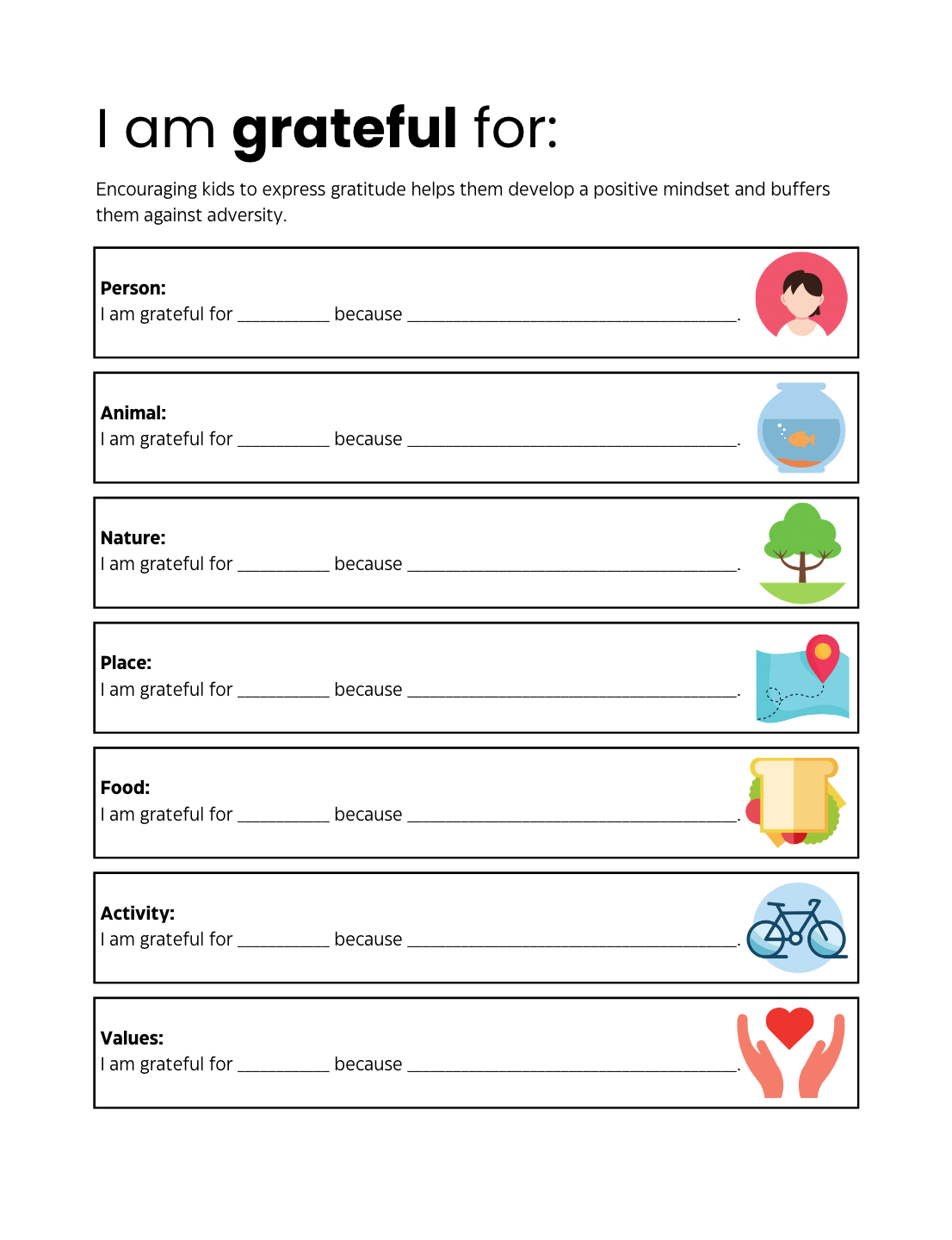
Encouraging kids to express gratitude helps them develop a positive mindset and buffers them against adversity.
REFERENCES
Kelly, J. D. (2015). Your best life: Perfectionism—The bane of happiness. Clinical Orthopaedics and Related Research, 473(10), 3108–3111. https://doi.org/10.1007/s11999-015-4279-9
Muppalla, S. K., Vuppalapati, S., Pulliahgaru, A. R., & Sreenivasulu, H. (2023). Effects of Excessive screen time on Child Development: An Updated review and Strategies for Management. Cureus. https://doi.org/10.7759/cureus.40608
Oflu, A., Tezol, O., Yalcin, S., Yildiz, D., Caylan, N., Ozdemir, D. F., Cicek, S., & Nergiz, M. E. (2021). Excessive screen time is associated with emotional lability in preschool children. Archivos Argentinos De Pediatria, 119(2). https://doi.org/10.5546/aap.2021.eng.106
Paulus, F. W., Ohmann, S., Möhler, E., Plener, P., & Popow, C. (2021). Emotional dysregulation in children and adolescents with psychiatric disorders. A Narrative review. Frontiers in Psychiatry, 12. https://doi.org/10.3389/fpsyt.2021.628252