Worksheets for Child Therapy: Activities

Our free printable therapeutic activities provide creative outlets for kids to explore their emotions, understand their behaviors, and develop essential coping skills.
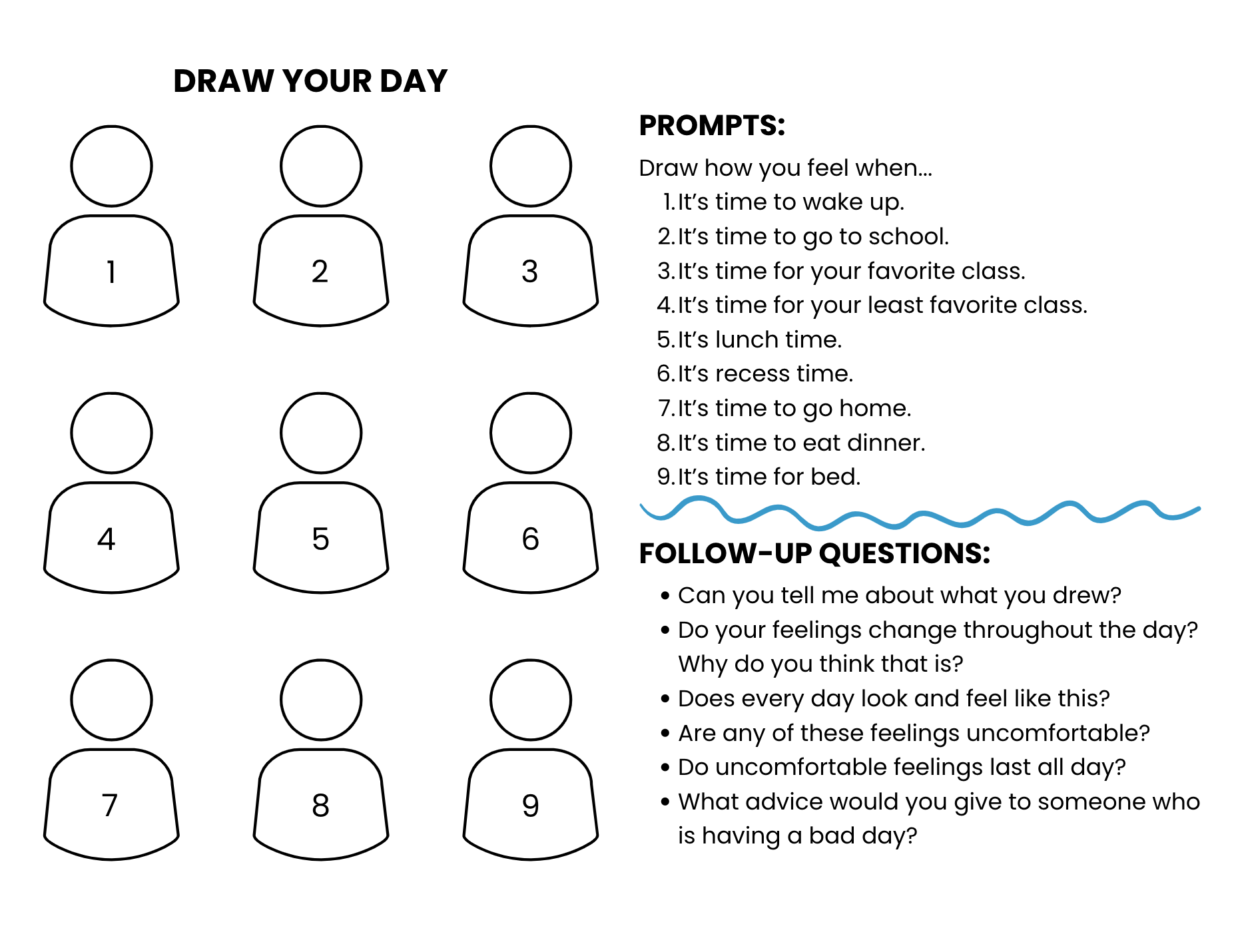
Draw Your Day
This worksheet is a great way to help kids conceptualize their days and learn about fluctuating emotions. Use this worksheet to talk about emotions and to gain insights into how a child functions and copes through different parts of their day.
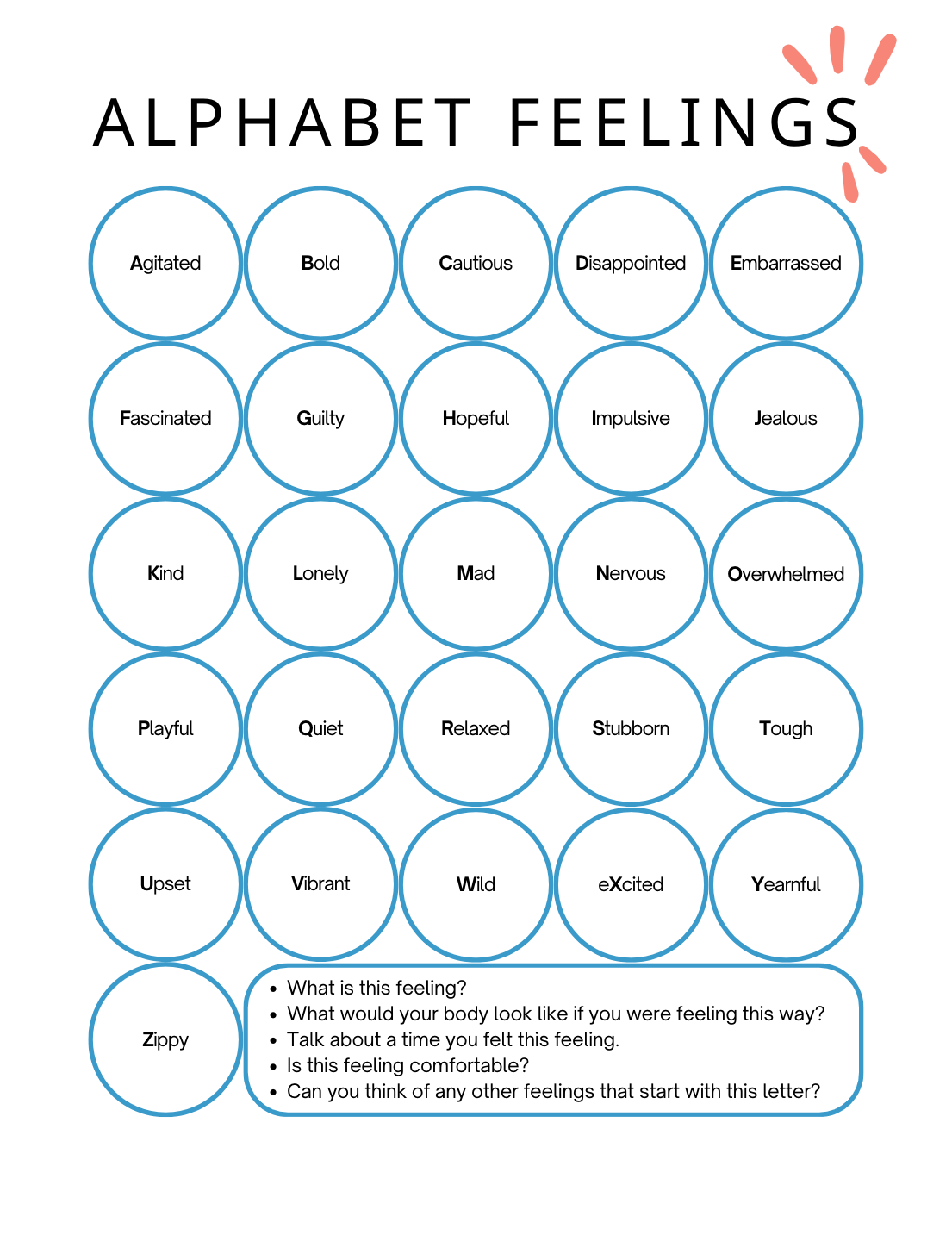
Alphabet Feelings
Emotional intelligence is the ability to understand, name, and recognize feelings in ourselves and others. It is an essential skill for children (and adults!) to cultivate because it forms the foundation for social and emotional development. Alphabet Feelings help kids practice and maintain social and emotional (SEL) growth.
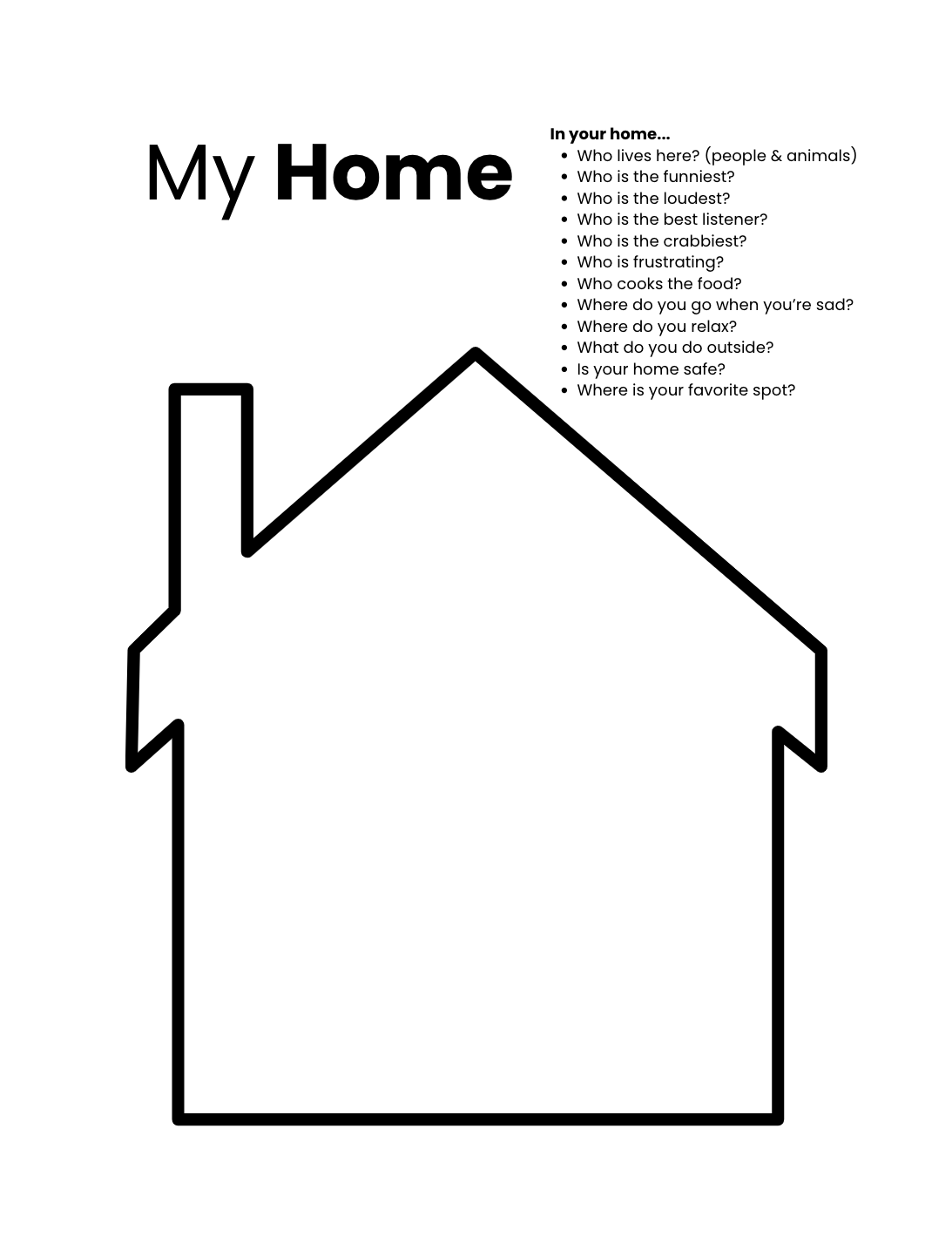
My Home
Ask kids to draw their home (or homes) and the people and animals that live there. Build a holistic family systems perspective by using the drawing to explore environment and family dynamics.
Who is the best listener? Where do you go when you're sad? Is your home safe?

Feeling Chart
This visual aid allows kids to identify, express, and understand their feelings in a tangible way. By regularly using feeling charts, kids develop emotional intelligence and gain insight into their moods and actions. Feeling charts create a visual language around emotions which allows therapists, parents, and educators to provide targeted support to kids in need.

Color Prompts: Flowers
Use color-coded prompts to talk about feelings, people, and favorites while bringing the flowers to life with a preferred medium. In this practice, art has the power to disarm apprehension and cultivate healthy rapport.
We suggest letting kids “unlock” the colors by answering the prompts.

Color-Coded Feelings
Color-coded feeling charts are an effective way to help kids understand, talk about, and manage their emotions. By building a strong emotionally literate foundation, kids gain the ability to articulate their thoughts, improve social skills, develop empathy, and form healthy connections.
This chart is an excellent companion to board games as it facilitates the incorporation of accessible emotional development practice. For example, use this chart while playing Candy Land and talk about the corresponding feeling when you draw a color card!
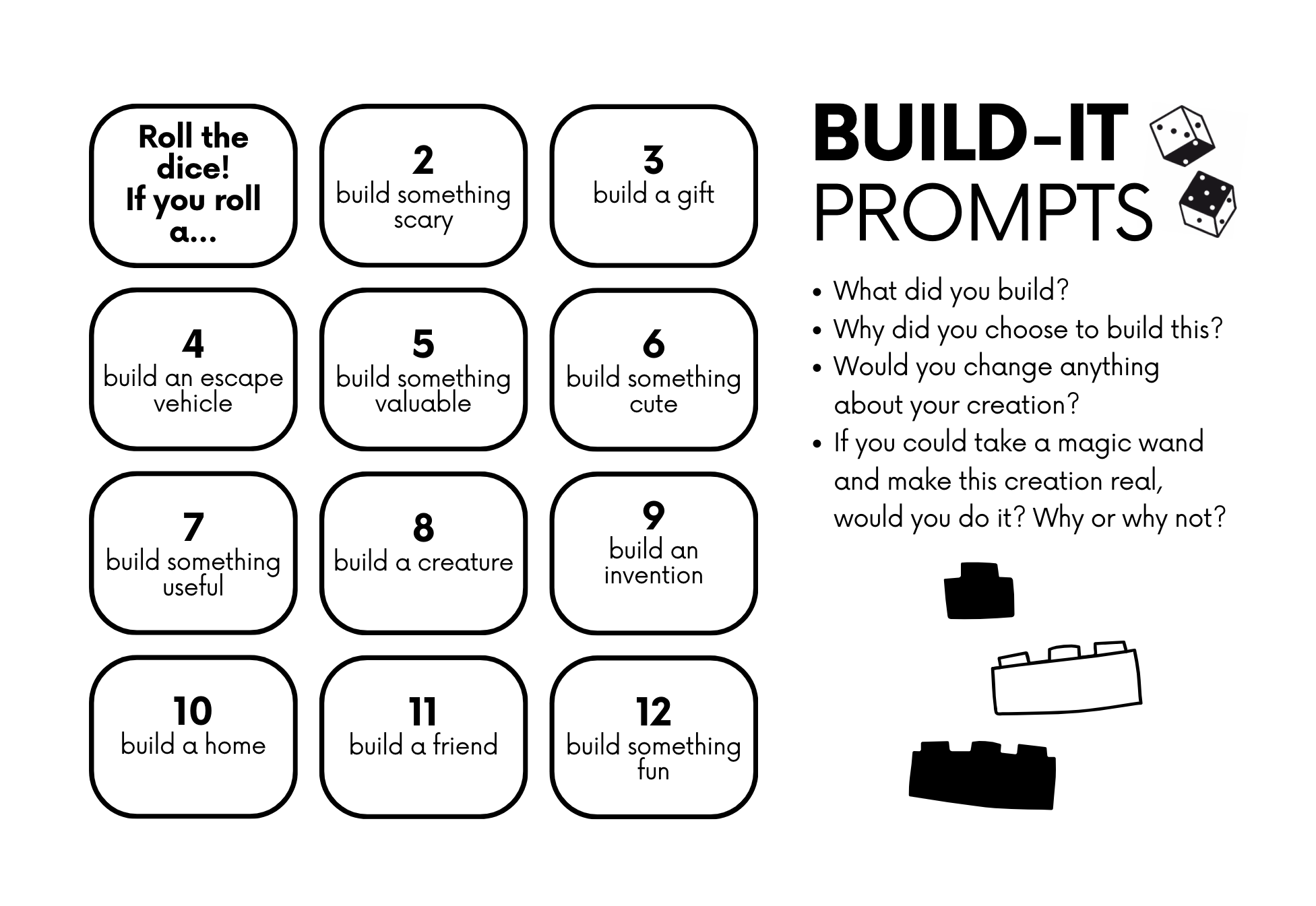
Build-It Prompts
This therapeutic activity is a great way to roll the dice and find constructive inspiration!
After each turn, try these talking points: What did you build? Why did you choose to build this? Would you change anything about your creation? If you could take a magic wand and make this creation real, would you do it? Why or why not?
Check out other hands-on therapeutic activities HERE!
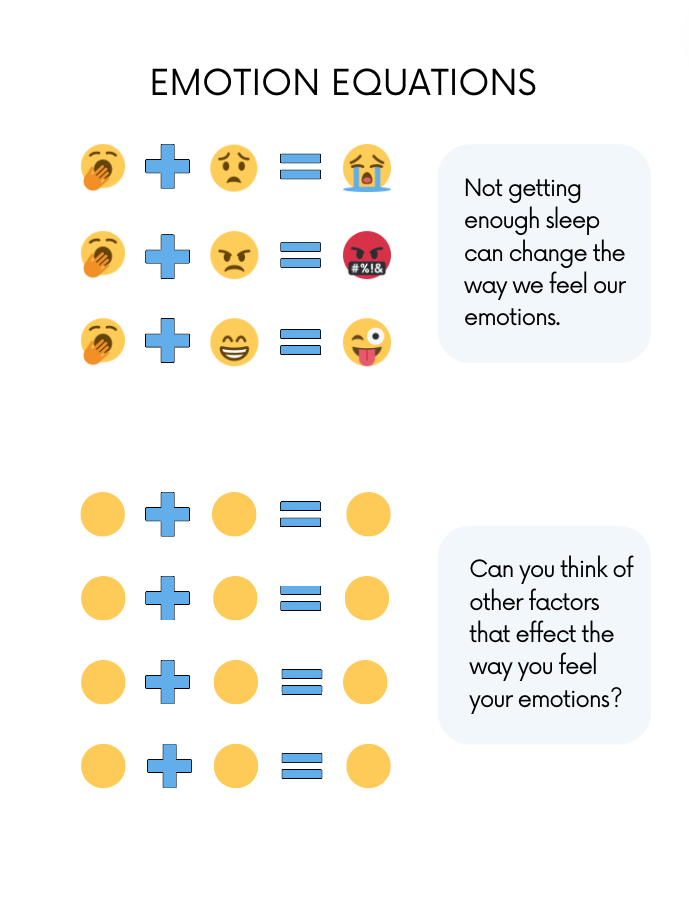
Emotion Equations
Not getting enough sleep can change the way we feel our emotions. What other factors effect the way we feel and behave? This worksheet helps kids understand how different environmental, physiological, social, emotional, or physical factors may effect their emotional expression. When kids understand their feelings, they are better able to self-regulate and have empathy for themselves and others.
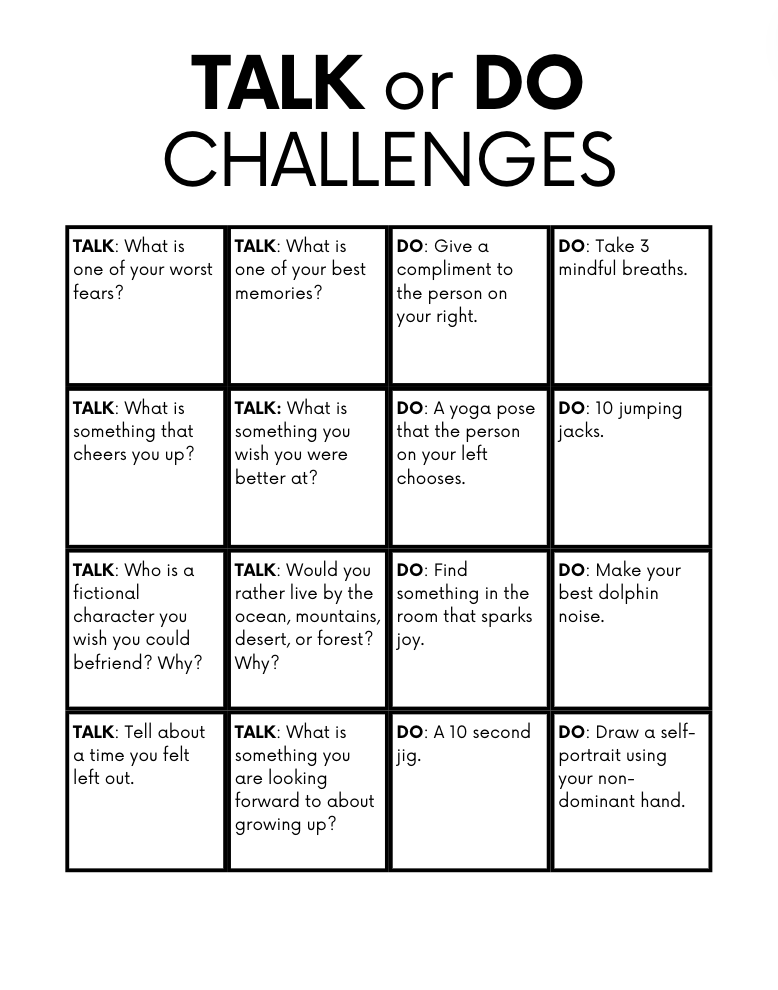
Talk or Do Challenges
Instead of “Truth or Dare,” we have “Talk or Do” challenges to help kids step outside of their comfort zone in a safe and playful way.
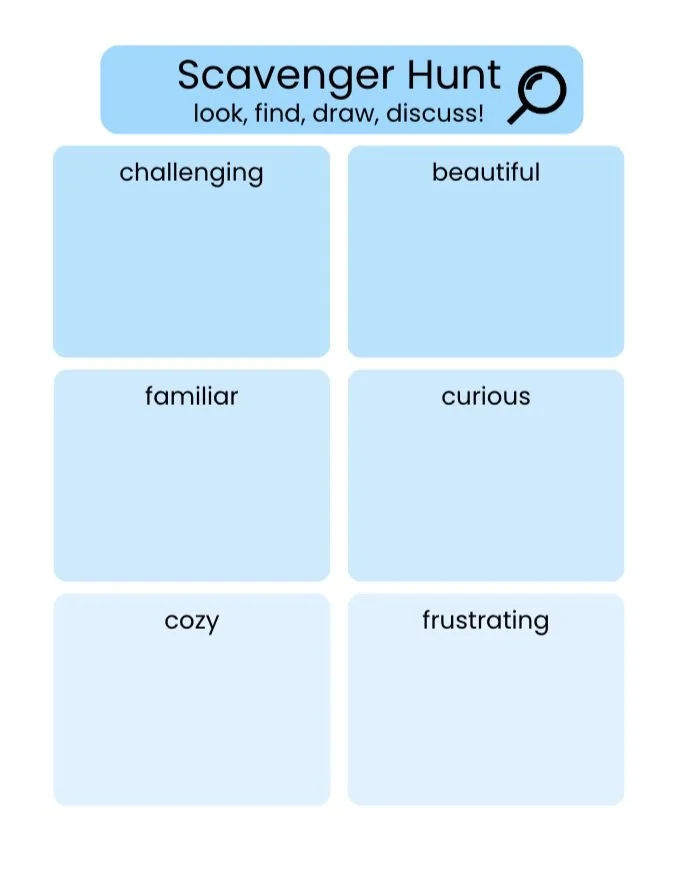
Scavenger Hunt
Identify, draw, and discuss places, objects, or people that match the word in each box. This scavenger hunt can be used to help therapists (or parents) understand a child’s viewpoint and emotional process.
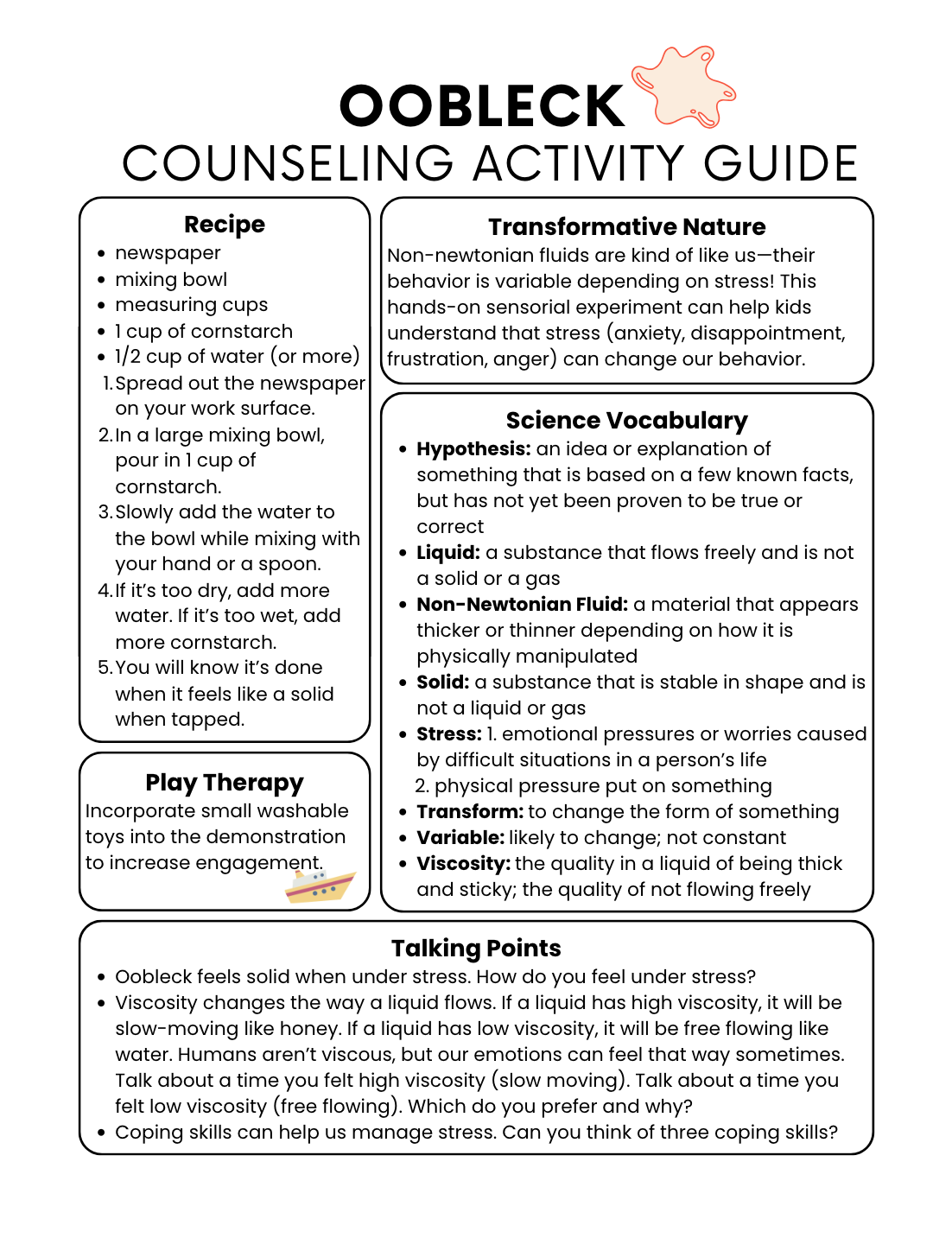
Oobleck Counseling Activity Guide
Oobleck is a non-Newtonian fluid that is kind of like us—its behavior is variable depending on stress! This hands-on sensorial experiment can help kids understand that stress (anxiety, frustration, disappointment, failure, anger) can change our behavior.
Read on to learn how to make Oobleck and how to talk to kids about transformative nature.

Color Prompts: Animals
Use color-coded prompts to talk about feelings, people, and bests/worsts while bringing the animals to life with a preferred medium. In this practice, art has the power to disarm apprehension and cultivate healthy rapport.
We suggest letting kids “unlock” the colors by answering the prompts. Whatever it is, the way you tell your story online can make all the difference.

Make the Face
Read a scenario prompt and ask the child to illustrate how the people in the scenario might be feeling. In this exercise, drawing faces allows kids to practice empathy and gain insight through perspective taking.
Some example prompts: How do you feel when you lose a game? How does your friend feel when they win a game? How do you want your friend to act when they win? How does your friend want you to act when you lose?
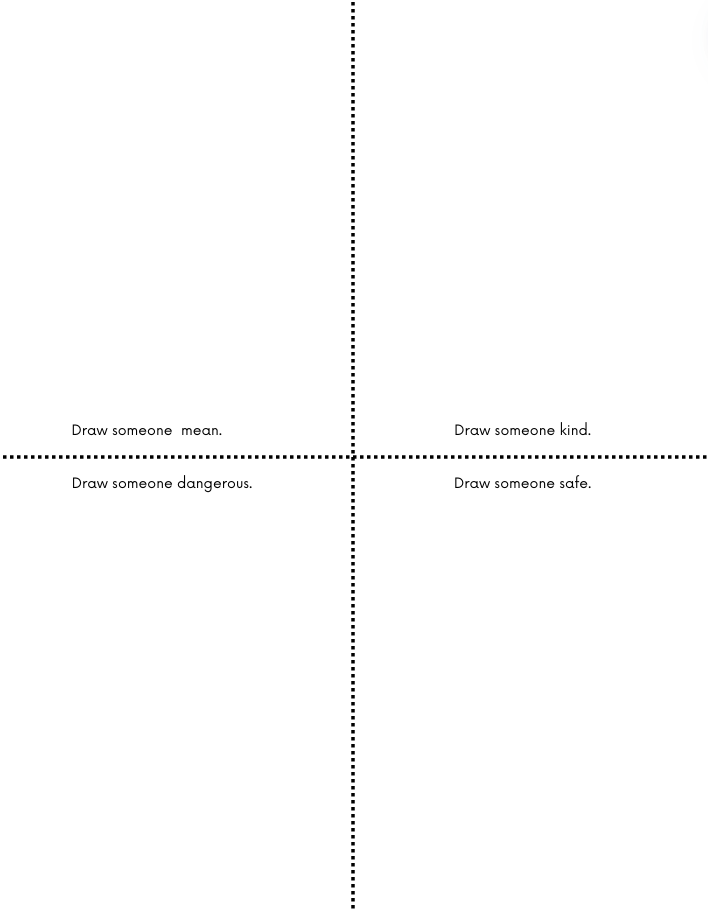
Drawing Prompts: Opposites
Encourage kids to identify, draw, and discuss people in their lives (either real or fantasy) that match the descriptor. This helps therapists (or parents) gain insight into how the child sees the world through an interpersonal lens.
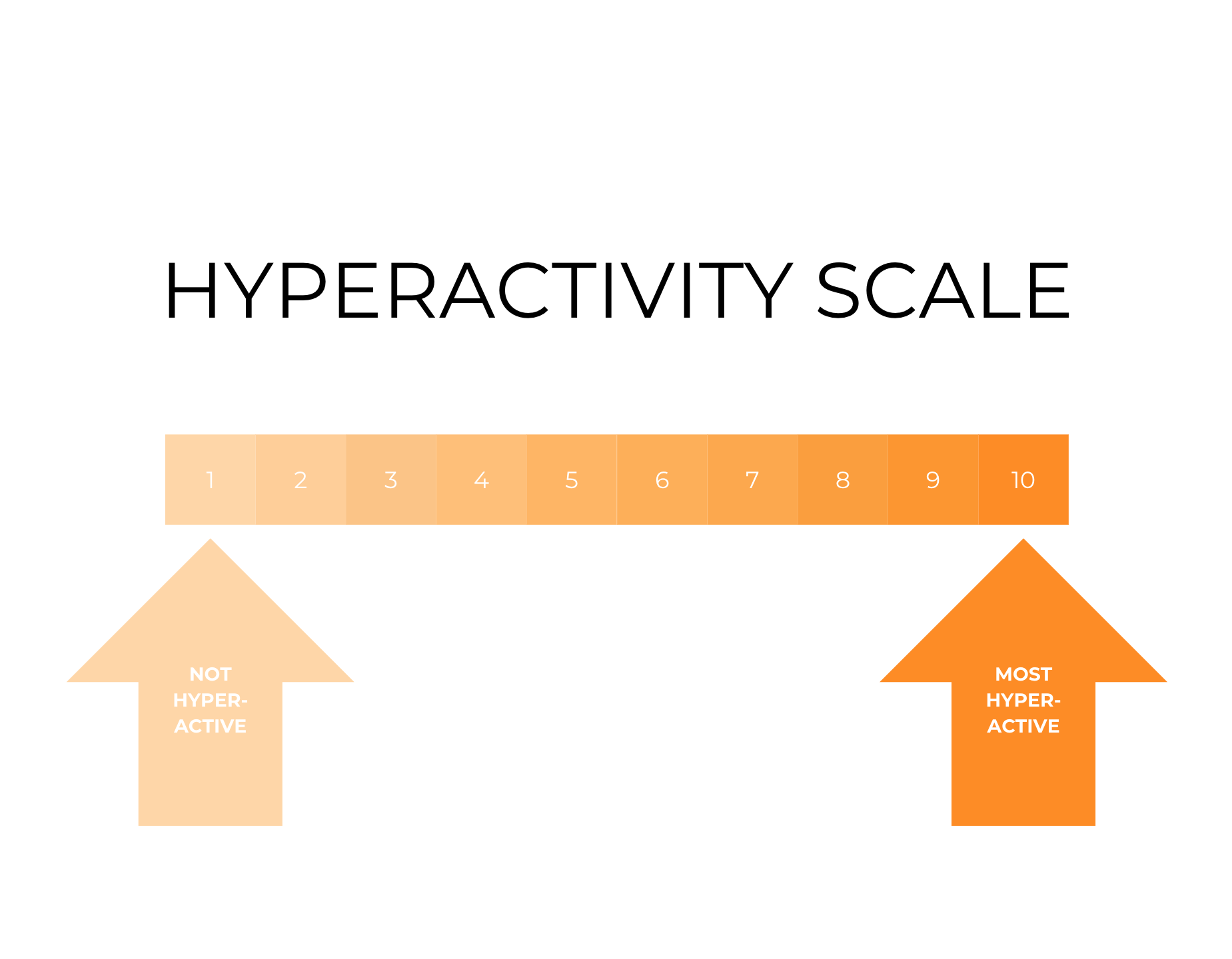
Emotion Scales
An emotion scale is a therapeutic tool used to help individuals identify, communicate, and track their emotions.
Explore our scales that measure ANGER, ANXIETY, SUICIDALITY, HYPERACTIVITY, DISTRACTIBILITY, SADNESS, and SELF-ESTEEM.
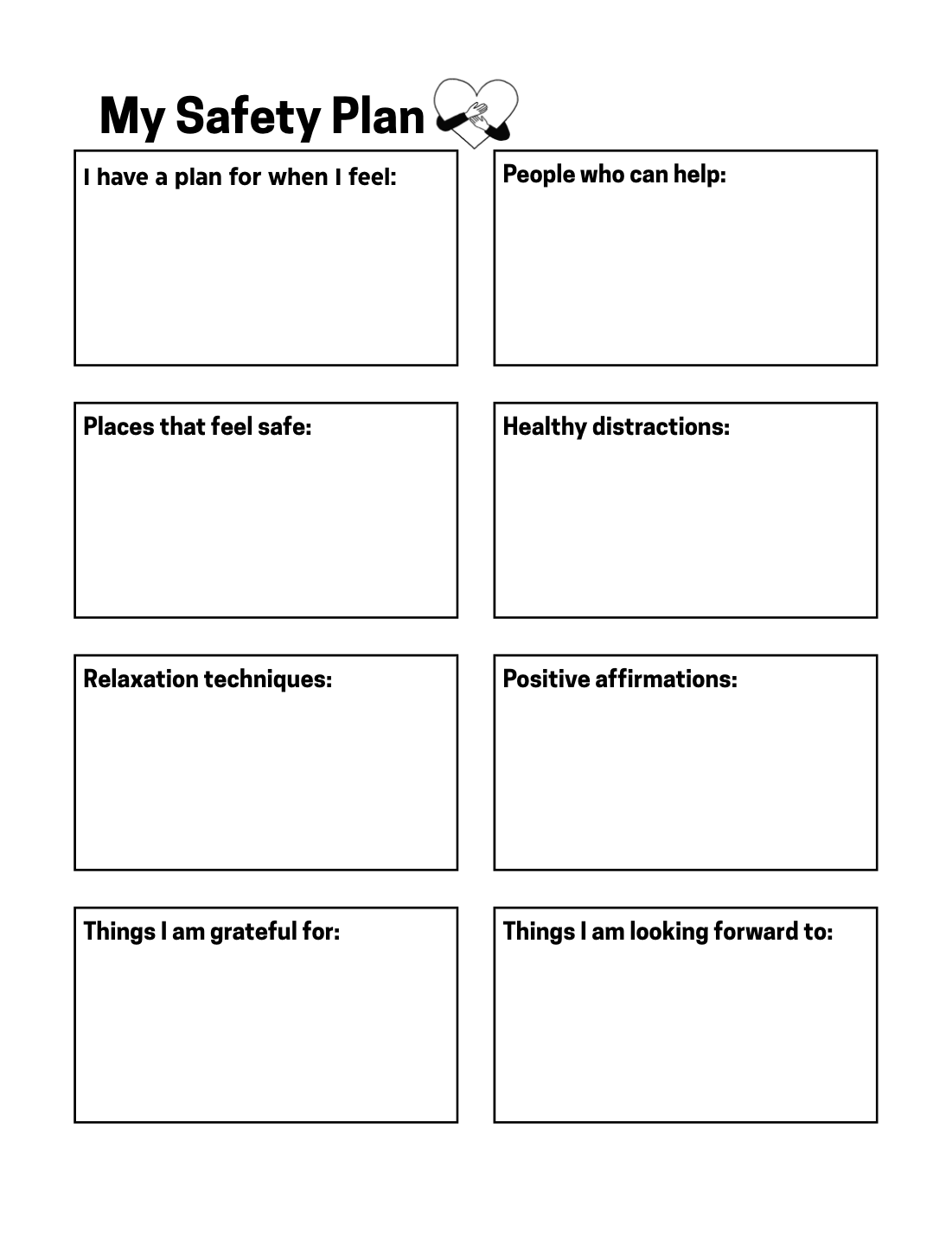
My Safety Plan
Early intervention can be life-saving. A safety plan is a personalized roadmap that kids can reference in times of distress. These plans work best when they are workshopped with a trusted adult to help kids identify triggers, pinpoint coping mechanisms, recognize gratitude, and determine safe people and places that can offer support.
When developed collaboratively with a trusted adult, safety planning shows kids that they are valued and that there is hope and help for them.
Check out other FREE PRINTABLE WORKSHEETS from Child Therapy Guide: