Promote Social and Emotional Learning (SEL)

What is Social and Emotional Learning (SEL)?
According to the National Center on Safe Supportive Learning Environments (NCSSLE), “social and emotional learning (SEL) involves the processes through which children and adults acquire and effectively apply the knowledge, attitudes, and skills necessary to understand and manage emotions, set and achieve positive goals, feel and show empathy for others, establish and maintain positive relationships, and make responsible decisions.
A growing body of research indicates that school-based efforts to promote students' social and emotional learning represent an effective approach to enhance children's success in school and life.”
Why are writing prompts helpful?
Guided by SEL learning outcomes, our writing prompts exercise the following skills:
Introspection: Help kids examine their thoughts, emotions, behaviors, and experiences.
Creativity: Challenge kids to consider unique perspectives and motivations.
Expressive Communication: Teach kids how to coherently express their thoughts and feelings through writing.
Problem-Solving: Show kids how written communication allows us the space to analyze information, consider viewpoints, and develop well-reasoned beliefs.
Confidence: Build self-esteem by giving kids an outlet to process and communicate complex emotions and scenarios.
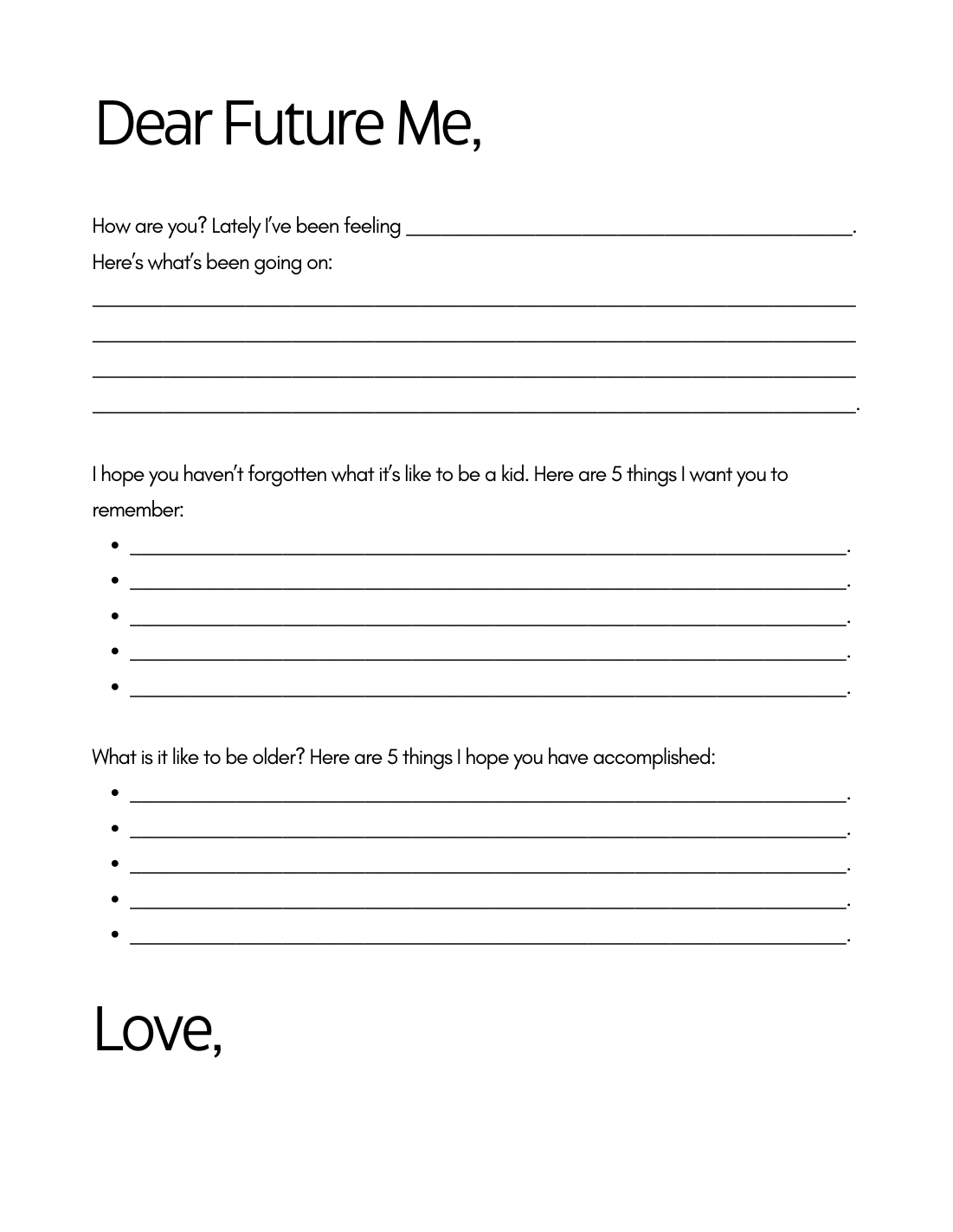
This letter template encourages kids to think about their present through the eyes of their future and vice versa.
Learn more about self-perception HERE.
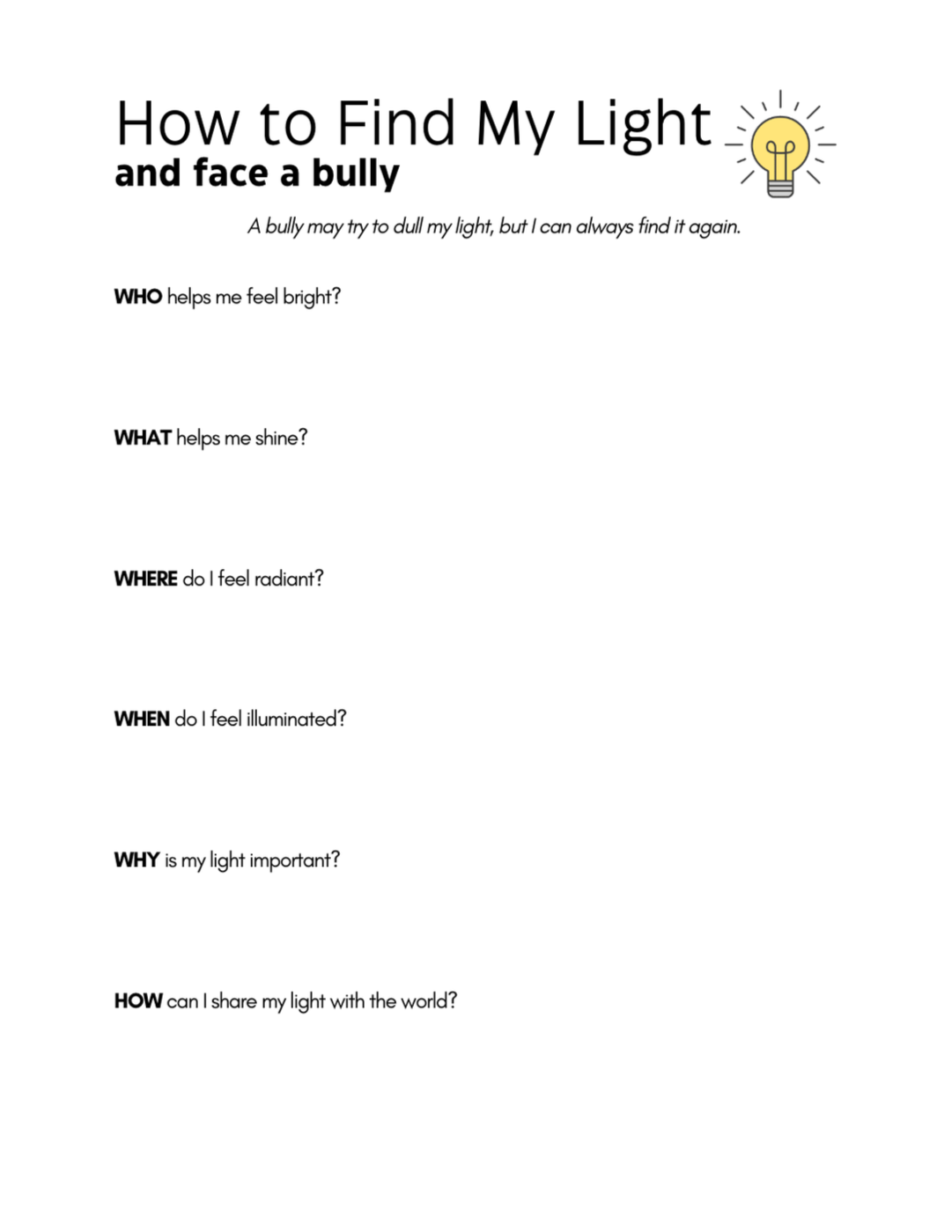
When working with victimized kids, it can be helpful to talk about preserving their “light” over confronting the bully. Some kids feel empowered to stand up to their bully, but many lack the social supports and/or confidence to successfully navigate a confrontation. In these cases, remind them that they don’t have to do anything except shield their light.

Help kids identify triggers for dysregulated emotions and behaviors, and then collaborate to find what helps calm them down.
Things don’t always go as planned, but foresight and self-empathy can help kids navigate through challenging moments.
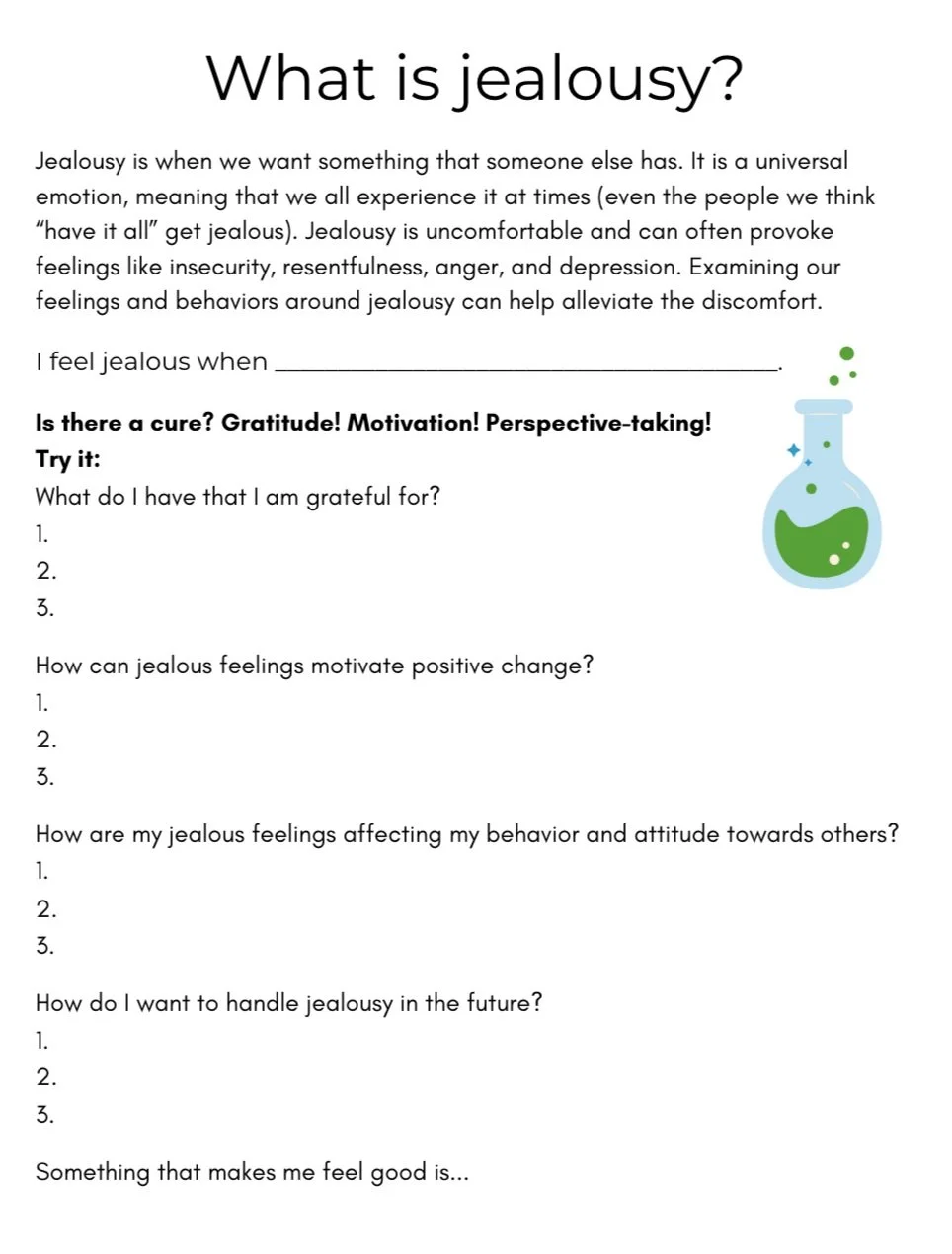
Jealous feelings can be hard to navigate. Help kids take a nuanced approach to the examination of this complicated emotion.
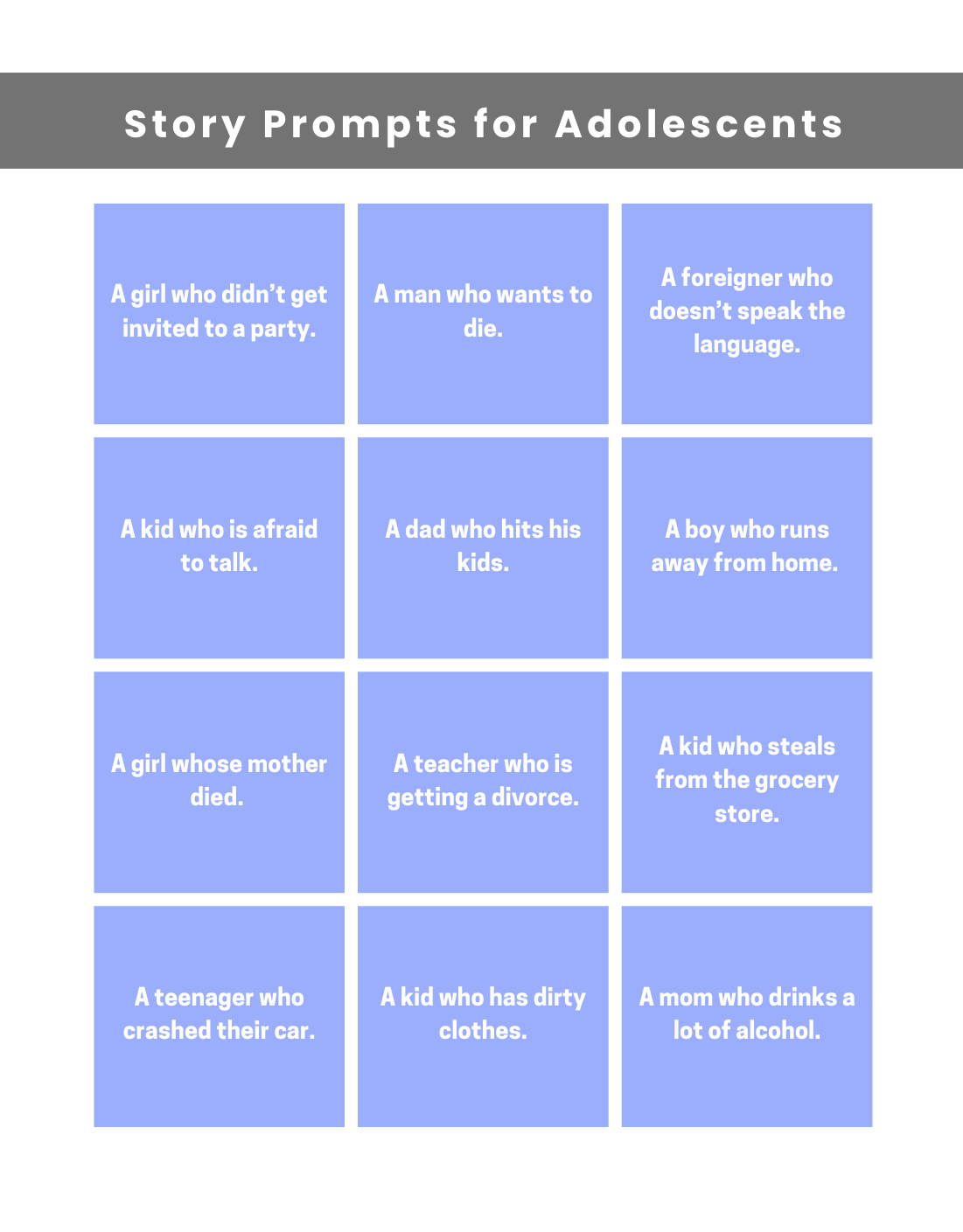
Story prompts are a great way to spark inspired perspective-taking! Choose a prompt and write a short story based on your choice. Think about your main character. How did they get here? What happens next?
Further Consideration: Do you have empathy for anyone in the story? Have you ever been in a similar situation? What advice would you give to the main character?
Check out our other free Therapeutic Resources for Teens!
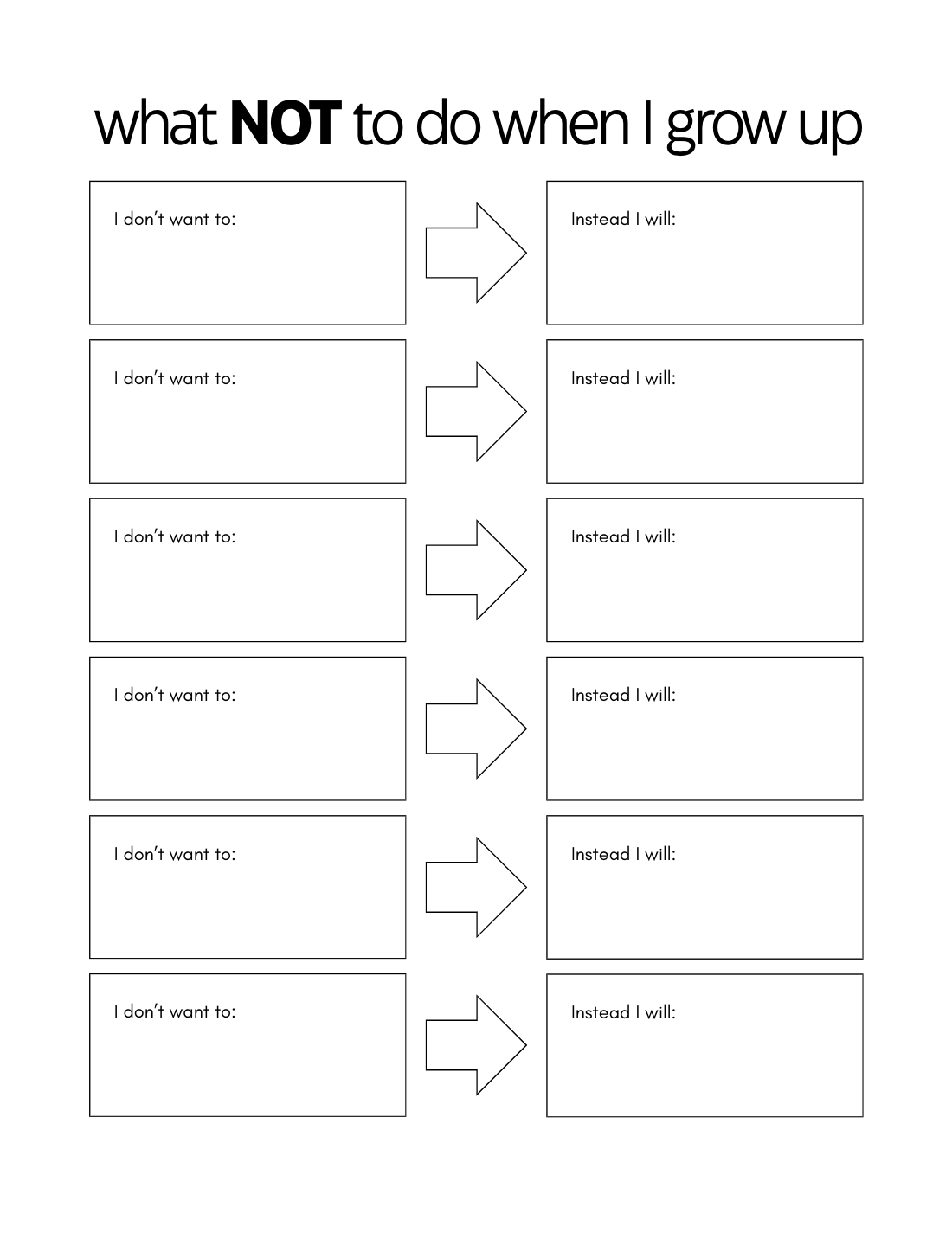
This writing exercise helps kids identify their values and preferences while prompting them to find productive alternatives to unwanted behaviors.
Learn more about self-perception HERE.

This prompt encourages kids to think and write about preoccupying parts of their consciousness. By visualizing “carrying” challenging memories, thoughts, or feelings, they can also begin to “unpack” what is not productive.
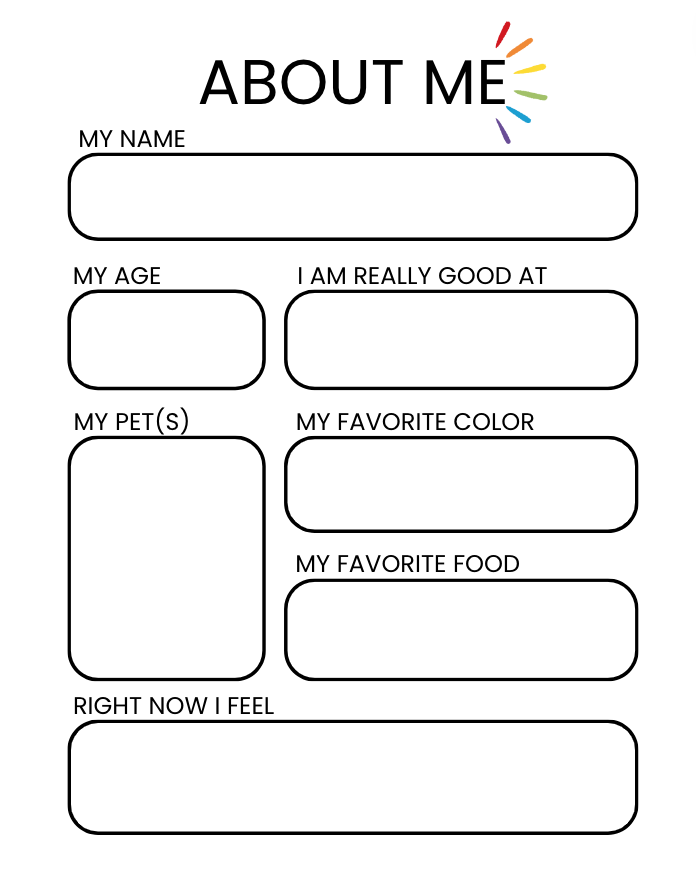
This worksheet is a great “get-to-know-you” tool. For school-aged kids, it is often used during a therapy intake session while the parent or guardian is communicating with the child therapist.

Letter templates can help kids understand, organize, and communicate complex feelings. These templates offer a unique opportunity to address the mind and body while also practicing self-appreciation.

Simple prompts can evoke profound insight. This exercise encourages kids to express the things they wish the people in their lives knew.
I wish my parents knew…
I wish my teacher knew…
I wish my friends knew…
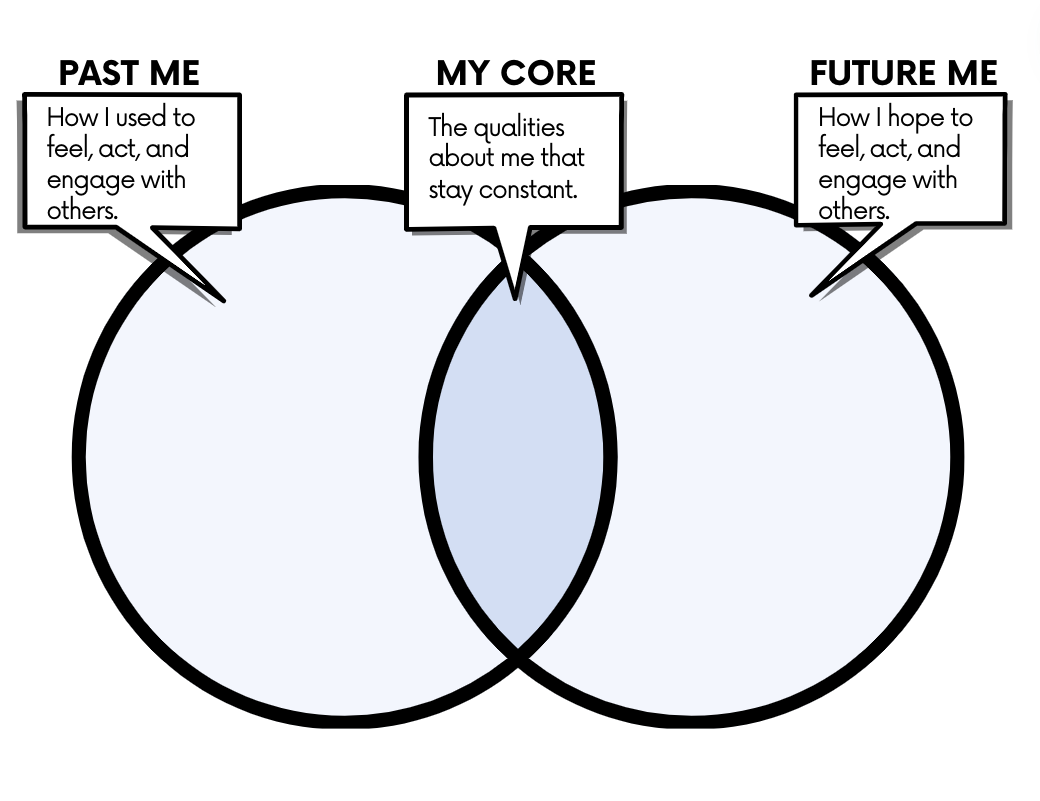
This writing prompt helps kids separate their behaviors from their “core self” in order to conceptualize how they hope to progress in the future.
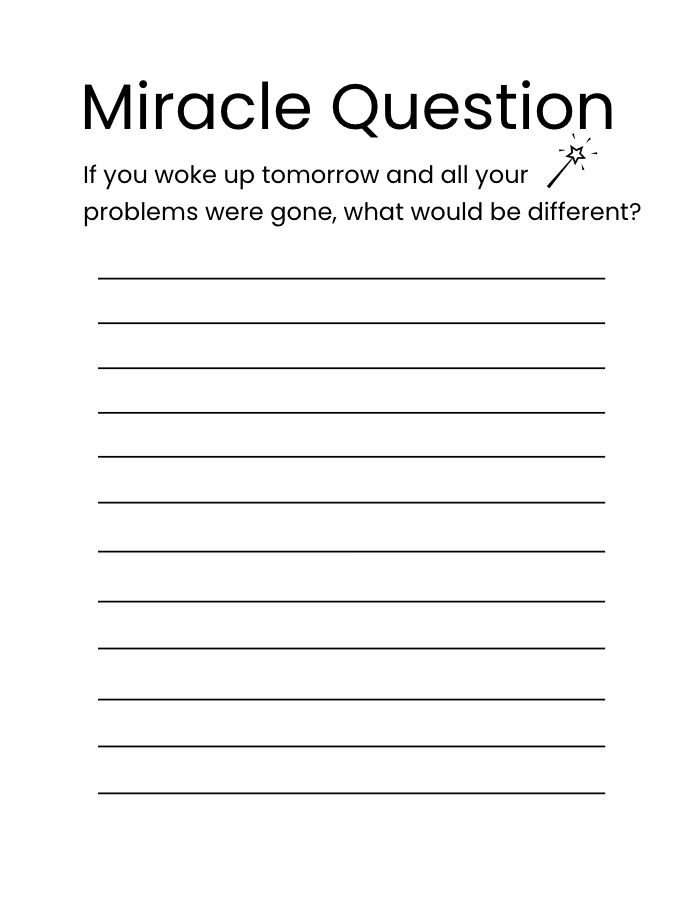
“If you woke up tomorrow and all your problems were gone, what would be different?”
The miracle question serves to help conceive and understand an issue. Once an issue is recognized, it can be addressed.

Use this prompt to help kids appreciate good days and receive bad days with a growth mindset.
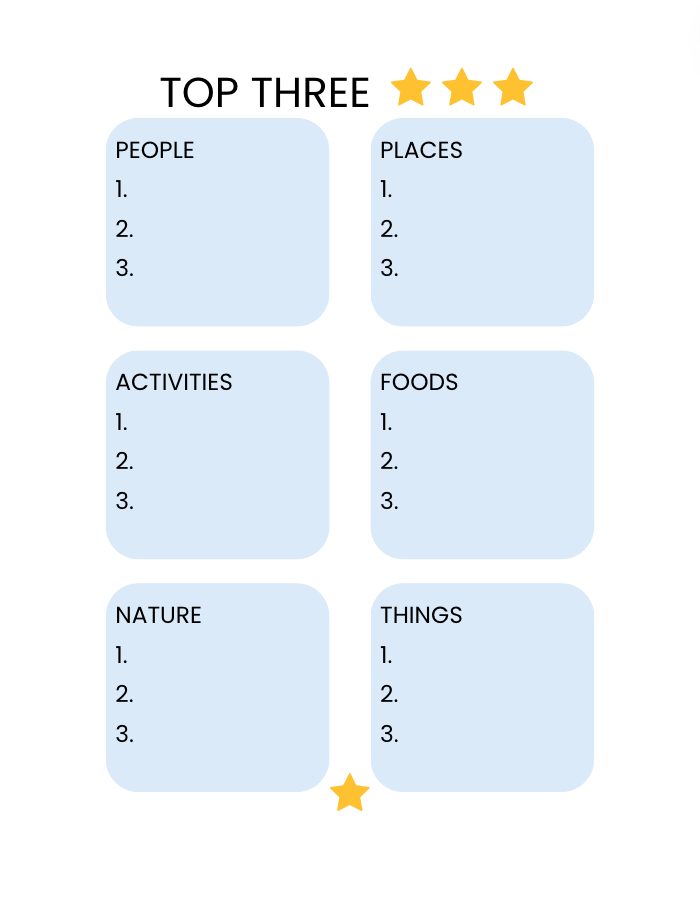
Use this simple list prompt to help kids develop an understanding of their values and preferences.
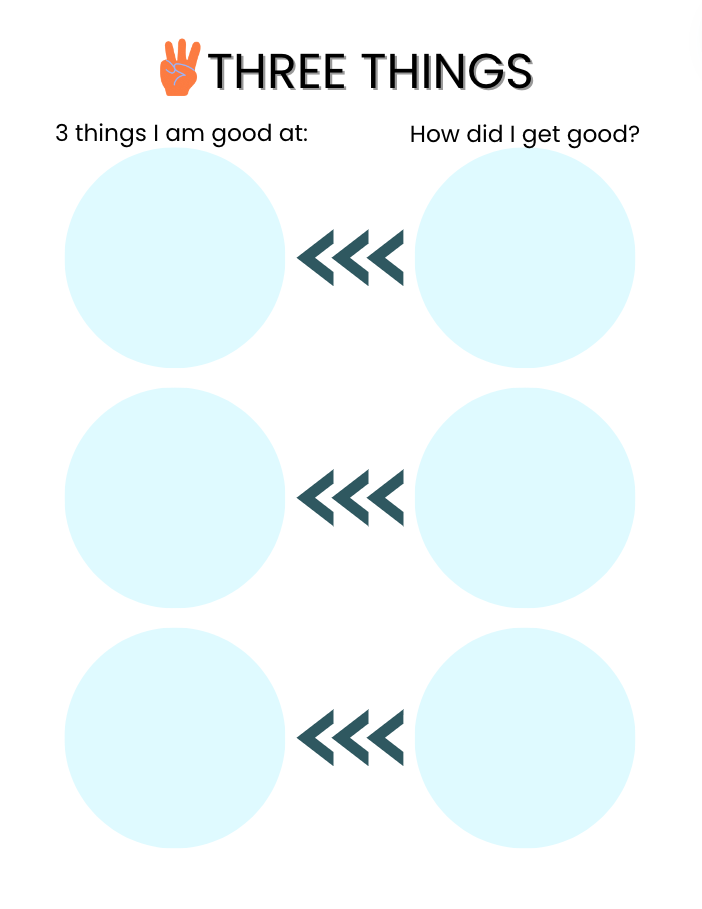
Foster a growth mindset with this exercise that emphasizes the value of effort.
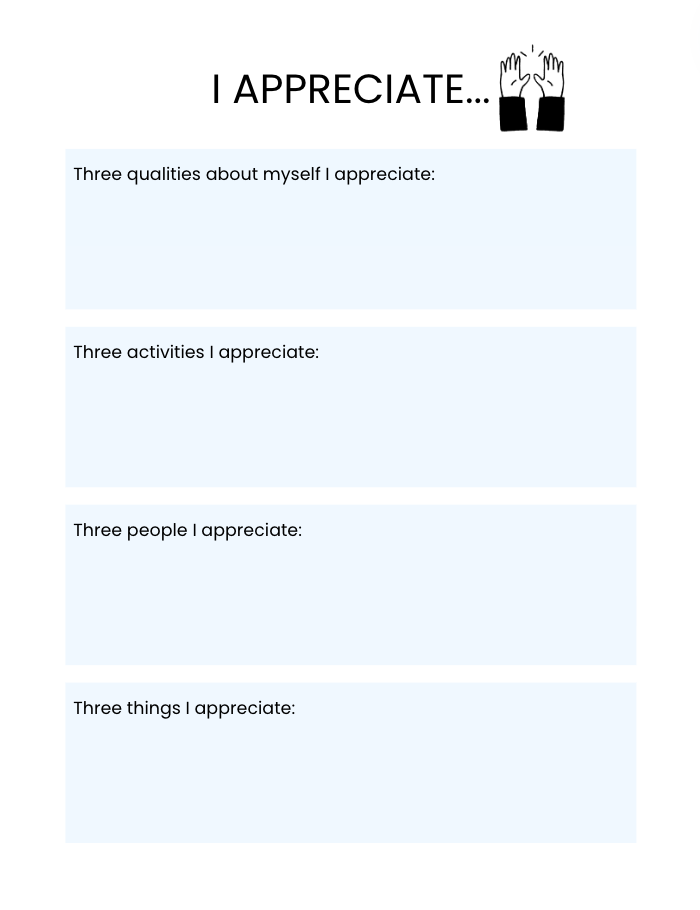
Gratitude is a powerful practice that is linked to resilience, flexibility, and a growth mindset. Identifying what is appreciated and what is not appreciated can help kids understand their own values and priorities.
Explore our full collection of Social and Emotional Learning (SEL) Worksheets HERE!