Growth Mindset VS Fixed Mindset
What is resilience and why is it important in childhood?
Resilience is an ability to adapt and grow through adversity. It is developed through a growth mindset and inhibited by a fixed mindset.
Growth Mindset
A growth mindset is a belief system that values effort and practice. Kids with a growth mindset are intrinsically motivated, embrace challenges, and learn from failures.
Fixed Mindset
A fixed mindset is a belief system that discounts effort and practice. Kids with a fixed mindset might give up easily, avoid challenges, and have a fear of failure.
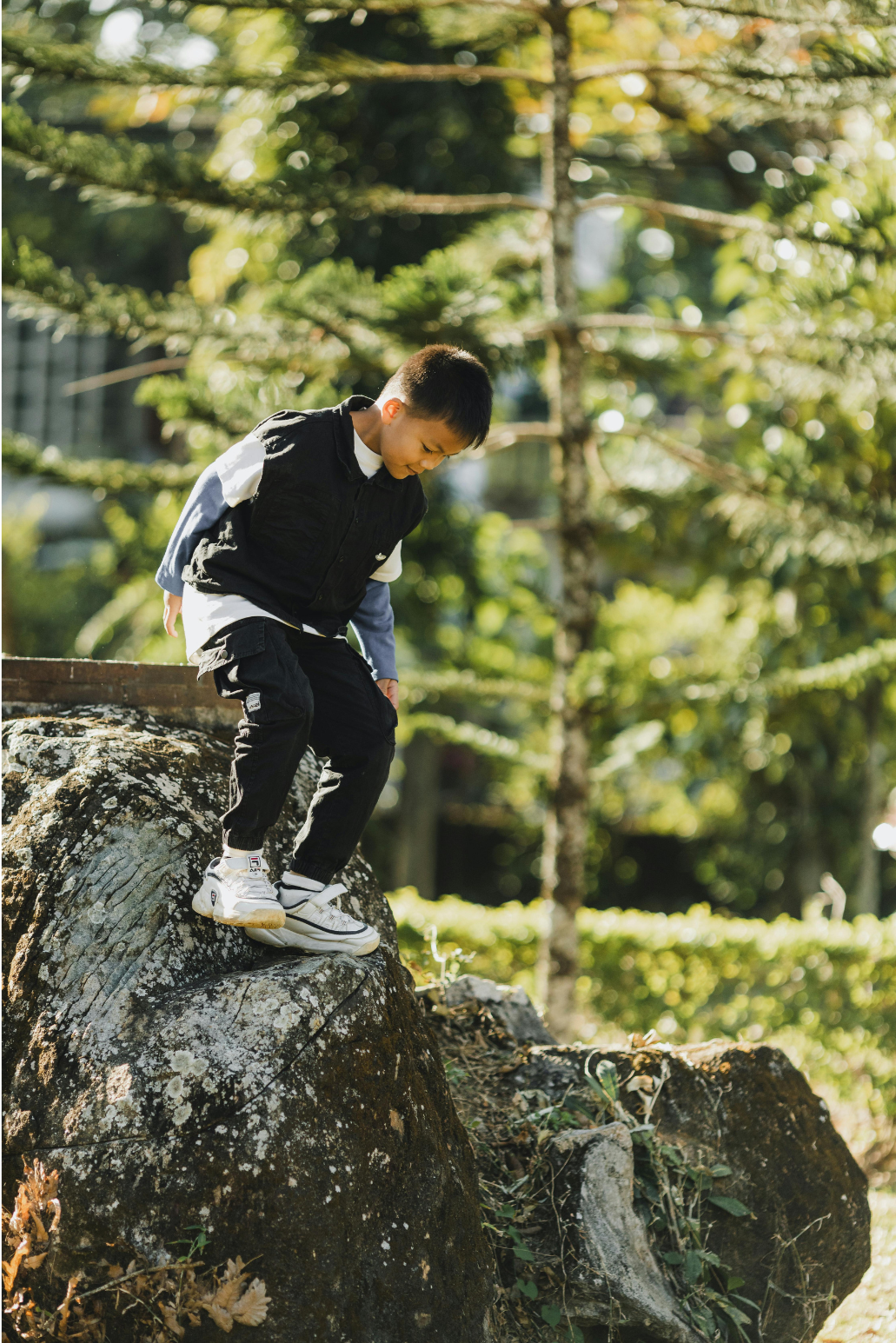
How can we nurture a growth mindset?
Curiosity, perseverance, self-efficacy, and flexibility are all traits that support resilience. We can introduce, encourage, and nurture those traits through:
Positive Reinforcement: Positive reinforcement acknowledges and rewards prosocial behavior in children. By providing appropriate praise, encouragement, or (with discretion) small rewards when a child exhibits positive actions or follows rules, parents can reinforce those behaviors. This approach helps to strengthen the child's understanding of what is expected of them and contributes to the development of healthy self-esteem, intrinsic motivation, and a sense of responsibility.
Parental Support: Parental support is crucial for a child's overall well-being and development. By offering a stable and nurturing environment, parents provide emotional security and foster a healthy parent-child bond. Encouragement, involvement, active listening, and guidance from the parent help instill trust, confidence, and a sense of belonging in the child.
Modeling: Modeling behavior is a powerful way for parents to demonstrate and reinforce prosocial behaviors. Children learn by observing the behavior of those around them, so by consistently demonstrating positive traits such as kindness, honesty, empathy, taking responsibility, constructive problem solving, and effective communication, parents set a positive example for their children to follow.
Discussion: Encourage children to express their thoughts, feelings, and concerns, and attend to their expression with empathy. By actively listening without judgment, parents create an environment where children feel comfortable sharing their experiences, and parents are able to address issues, offer guidance, and provide support in a collaborative manner. Explore our conversation starters for ideas to help children develop effective communication skills.
Mindfulness: A major component of mindfulness practice is gratitude. Encouraging kids to express gratitude helps them to develop a positive mindset and buffers them against adversity. A habit of gratitude contributes to a resilient foundation for facing life's inevitable ups and downs. Learn how to incorporate mindfulness into daily practice with our mindfulness activities and picture books about mindfulness!

Talk About It!
Having open dialogue with kids is a great way to support a growth mindset. Conversations can serve as mental rehearsals to help kids build a framework for how they will approach future challenges and handle set-backs.
Try these open-ended questions to understand their mindset and to express your own perspective:
What does it mean to fail?
What kind of people never fail?
What can you learn from failing?
What are the rewards of trying?
Talk about a goal you have.
What is the hardest part about starting something new?
What is the best part about starting something new?
What is one new thing you’ve tried recently?
What is a mistake that you learned from?

The Power of Practice!
A growth mindset takes practice! Low-Stakes attempts and failure through play is a great way to exercise resilience and a growth mindset. This includes encouraging age-appropriate activities that may be frustrating. With a growth mindset, frustration is an emotion that can be constructively harnessed to achieve a goal.
TRY IT:
Maze Cube
Physical Activity (hula hoop, jump rope, roller skating, bike riding, etc)
For more, explore our therapeutic activities and our recommended toys for social-emotional learning!

A free printable version of this resource is available in our Infographics Tab!
REFERENCES
Growth Mindset vs. Fixed Mindset: What’s the Difference? (2022, March 10). Harvard Business School. https://online.hbs.edu/blog/post/growth-mindset-vs-fixed-mindset#:~:text=Someone%20with%20a%20growth%20mindset,stable%20and%20unchangeable%20over%20time.
Resilience. (2020, August 17). Center on the Developing Child at Harvard University. https://developingchild.harvard.edu/science/key-concepts/resilience/
Resilience guide for parents and teachers. (2012, January 24). American Psychological Association. https://www.apa.org/topics/resilience/guide-parents-teachers